The Houses that Can't be Built in America - The Missing Middle
Not Just Bikes4 HN recommenders · recommended in 4 months, 2021–2023
explainer · general · evergreen · 2021–2023 on HN
Not Just Bikes explains missing middle housing, such as duplexes, townhouses and small apartment buildings. The video argues that zoning in the US and Canada has made these options almost illegal.
Recommended as the standard short overview of missing middle housing and its link to zoning reform.
Up next
 5 mo on HN
The Lively & Liveable Neighbourhoods that are Illegal in Most of North America
Not Just Bikes
5 HN recommender · 2021–2024
 2 mo on HN
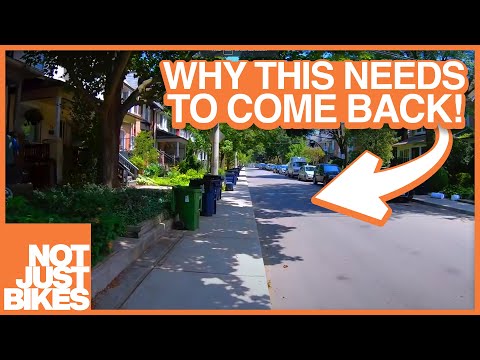
Suburbs that don't Suck - Streetcar Suburbs (Riverdale, Toronto)
Not Just Bikes
3 HN recommender · 2021–2026
 10 mo on HN
Why This Channel Exists (and why I hate Houston)
Not Just Bikes
11 HN recommender · 2021–2025
 11 mo on HN
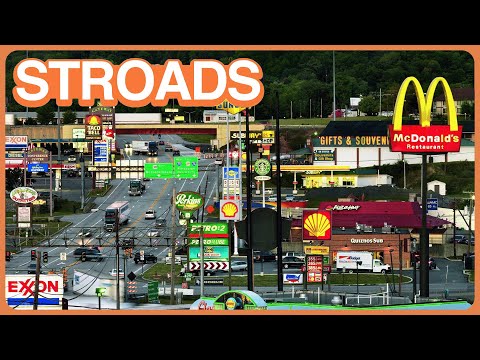
Stroads are Ugly, Expensive, and Dangerous (and they're everywhere) [ST05]
Not Just Bikes
12 HN recommender · 2021–2025
 5 mo on HN
How Bankrupt American Cities Stay Alive - Debt [ST04]
Not Just Bikes
7 HN recommender · 2021–2024
 4 mo on HN
Do Your Buses Get Stuck in Traffic? (The Downs-Thomson Paradox)
Not Just Bikes
4 HN recommender · 2021–2023
 12 mo on HN
How Self-Driving Cars will Destroy Cities (and what to do about it)
Not Just Bikes
17 HN recommender · 2024–2026
 10 mo on HN
Why American Cities Are Broke - The Growth Ponzi Scheme [ST03]
Not Just Bikes
14 HN recommender · 2021–2024
 9 mo on HN
The Wrong Way to Set Speed Limits [ST06]
Not Just Bikes
9 HN recommender · 2021–2025
 9 mo on HN
Cities Aren't Loud: Cars Are Loud
Not Just Bikes
10 HN recommender · 2021–2025
 10 mo on HN
Why Canadians Can't Bike in the Winter (but Finnish people can)
Not Just Bikes
10 HN recommender · 2021–2026
 9 mo on HN
How the Dutch got their cycle paths
BicycleDutch
9 HN recommender · 2013–2022
12 comments from Hacker News
The Not Just Bikes [1,2,3] YouTube channel also has an excellent series of videos based on work from Strong Towns. I link to these videos whenever a friend asks why I chose to leave the United States. :) [1] link [2] link [3] ▶ this video
Seems to me you need to watch the NotJustBikes overview of the Missing Middle problem ▶ this video Super dense cities are efficient in some ways, but they have tons of other problems and they externalize tons of costs. What we're missing in the U.S. is human-scale density, especially in the form of cohousing arrangements. Tall high-rises are not actually efficient. You know how much energy it takes to have elevators going up and down 40 floors along with all the other stuff? Land is not the single factor to calculate when we want efficiency.
This unfortunately true in California. NIMBY moment is strong. Another perspective.. ▶ this video (Love this channel!)
Yes, and it's often referred to as 'gentle density'. The idea is to build relatively dense housing, but at a human scale - mostly 3-5 storeys. Combined with narrow streets that support walking and cycling, this creates enough density to support a 'real' city centre with shops, restaurants, offices and so on. I think these videos convey the idea well: * link * ▶ this video Of course, this is not to say that you _can't_ build other kinds of housing. But many cities are badly balanced.
AirBnB sux but zoning has arguably been a net negative on most societies in many ways link ▶ this video for me what I noticed lately is that in California it's impossible to have a quiet modern apartment because nearly 100% of modern apartment buildings are only allowed to be built on busy noisy high traffic streets. If you want a quiet street you're forced to buy/rent a house
Many of those codes have been designed to protect incombents from competition and various other forms of encouraging one form of living (car dependent) over others. Plenty of people in Japan, Korea, Hong Kong, etc live happy lives in much much smaller living areas. This makes them more affordable. But building codes in many places in the USA disallow making places that small. Other examples of questionable codes are codes that require parking spaces, codes that require front yards, codes that require backyards, etc.... ▶ this video link
I will grant that Seattle is currently investing in public transit. And that in the next 10-15 years, they have the opportunity to improve that situation greatly (providing people good/consistent transit to downtown). There's a lot of the missing middle in Seattle for housing: ▶ this video Which has been demonstrated to pay for itself (and support other businesses). Zoning for this would go a long way towards helping to alleviate the increasing cost of housing. (Also actively/readily) makes more money than it costs to maintain. I think there's also something to be said for getting rid of cars in Downtown Seattle (still need to provide good accessible options). I originally clicked on this article in hopes that was what people were doing. Tangent: Shuffling homeless people around with cement "eco" blocks (legitimately interested in the etymology of that name) turned out to be the sad waste of resources we were going for here... Mental Health feels a lot more difficult than this. Probably needs more of a national fix cause healthcare is too expensive and inaccessible in the US.
I can’t claim to have visited all major cities in the US, but they do seem to match the “urban core and suburbs” pattern, compared with my experiences visiting European cities. Not Just Bikes has a video about that: ▶ this video
This is a false choice. Limiting limitless consumption is not automatically reduction in the standard of living for most people. There is a huge effect when cutting emissions of the top 10%, even a tiny bit. [1] The graph is likely hiding that if the top 10% was segmented more, it would be very hop heavy - even limiting it to the median of the top 10% should do a lot. The US is also uniquely positioned here to cut their emissions in half and still have more emissions per capacita than Europe[1]. And no, the problem is not that the US is large and cars are required; cars are fine for rural people, but they are not fine for the spawling car-dependent suburban areas US cities keep creating. [2] [1]: link [2]: (video) ▶ this video
They are gonna need cars and furniture, yet those are not an investment. Is USA running out of land, or Timber, or unemployed people that could be employed to build a house? We need to get institutional 'investment' out if house flipping and fix zoning. ▶ this video
"But there's also the side of people wanting single family homes instead of apartment' Most people who can't afford a home would not reject a decent apartment, they just want somewhere to live. Also those are not the only two choices, there are duplex and triplex homes, illegal in most of us, and other variations ▶ this video "Nothing wrong with people in a community wanting to set standards for their area." So in this "democracy" people who don't own a house have no voice and no right? Why does this remind me of some other mechanism for opressing undesirables?
> Personally I think that Americans just don't realize that it's not cities that suck, it's American cities that suck. Plenty of pleasant cities to live in in the world. The YouTube channel "Not just bikes" talks about this. In the USA, it is commonly seen that there are only two possible configurations for human settlements: sprawling suburbs, or Manhattan-style high-density towers. The medium-density style of city common across a lot of Europe and Asia is not very well known in the USA and Canada outside of a select few older cities which developed to a large enough size before the automobile took over. ▶ this video