Ray Summit 2022 - Day 1 Keynote - Fireside Chat
AnyscaleCited 3× on HN, 2023–2023
interview · intermediate · 2023–2023 on HN
A Ray Summit 2022 keynote fireside chat between OpenAI's Greg Brockman and Anyscale's Robert Nishihara. They discuss how OpenAI's training infrastructure evolved and its use of Ray.
Cited as a source for the fact that OpenAI uses Ray for training, and for Brockman's views on developer speed.
Up next
 16 mo on HN
The spelled-out intro to neural networks and backpropagation: building micrograd
Andrej Karpathy
17 HN recommender · 2022–2025
 14 mo on HN
But what is a neural network? | Deep learning chapter 1
3Blue1Brown
16 HN recommender · 2017–2025
 10 mo on HN
AlphaGo - The Movie | Full award-winning documentary
Google DeepMind
10 HN recommender · 2020–2025
 10 mo on HN
Transformers, the tech behind LLMs | Deep Learning Chapter 5
3Blue1Brown
13 HN recommender · 2024–2026
 10 mo on HN
USENIX Security '18-Q: Why Do Keynote Speakers Keep Suggesting That Improving Security Is Possible?
USENIX
10 HN recommender · 2018–2026
 11 mo on HN
Lecture 1 | Machine Learning (Stanford)
Stanford
11 HN recommender · 2008–2020
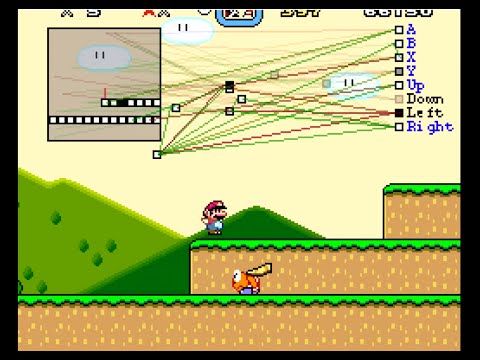 10 mo on HN
MarI/O - Machine Learning for Video Games
SethBling
10 HN recommender · 2015–2026
 8 mo on HN
Deep Dive into LLMs like ChatGPT
Andrej Karpathy
10 HN recommender · 2025–2026
 10 mo on HN
Computer program that learns to play classic NES games
suckerpinch
9 HN recommender · 2015–2025
 9 mo on HN
RL Course by David Silver - Lecture 1: Introduction to Reinforcement Learning
Google DeepMind
9 HN recommender · 2017–2026
 8 mo on HN
Let's build GPT: from scratch, in code, spelled out.
Andrej Karpathy
14 HN recommender · 2023–2025
 7 mo on HN
Bay Area Vision Meeting: Unsupervised Feature Learning and Deep Learning
Google TechTalks
9 HN recommender · 2011–2013
3 comments from Hacker News
[Author] OpenAI uses Ray, the open source version of Anyscale Platform, for training their models (video evidence: ▶ this video ). Ray ( link ) is available for anyone to use. You can also use Aviary ( link ) to serve any of those models yourself.
Consistently I see this advice from everyone who I consider has achieved outside success in their field. Greg Brockman (OpenAI Cofounder) : Developer Speed is the most important thing I care about: ( ▶ this video ). I believe he said more about this topic but I can't find it now. Frank Slootman (Snowflake CEO): In his book Amp It Up, he stresses why pushing people to move fast is extremely important Elon Musk (Let's not get into a debate about Elon and just agree that he has helped setup 2 100bn+ companies) : "I believe in maniacal sense of urgency, if you can implement something right after the meeting, do that", upon his work philosophy when taking over twitter. In my personal experience one of the most impressive coders I met, worked extremely fast while also being very accurate, almost indicating that no tradeoff even exists.
I'm one of the Ray developers, thanks for the shoutout :) If you're curious about how Ray is used for LLMs, here are some interesting examples of LLM projects using Ray! - Alpa does training and serving with 175B parameter models link - GPT-J link - Another HN thread on training LLMs with Ray (on TPUs in this case) link - OpenAI fireside chat on the evolution of their infrastructure and usage of Ray for training ▶ this video - Cohere on their architecture for training LLMs link Some other thoughts 1. There is a lot more we want to do to make Ray better for working with large language models and for making training, serving, and batch inference work well out of the box. 2. The original post is about training, but we actually see even more interest in fine-tuning and serving with LLMs, in part because there are good pre-trained models. 3. For LLMs, we see a lot of interest in Ray + Jax or Ray + TPUs relative to what we see in other use cases.