Robert Sapolsky: The Biology of Humans at Our Best and Worst
Stanford Iranian Studies Program3 HN recommenders · recommended in 3 months, 2020–2026
lecture · general · evergreen · 2020–2026 on HN
A 73-minute Stanford talk by Robert Sapolsky drawn from his book Behave. It surveys the biological factors behind human behavior at its best and worst.
HN recommends Sapolsky as an exceptional storyteller and points to this lecture on the biology of human behavior and violence.
Up next
 9 mo on HN
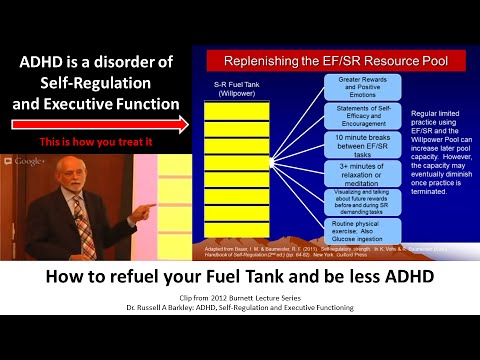
This is how you treat ADHD based off science, Dr Russell Barkley part of 2012 Burnett Lecture
Adhd Videos
10 HN recommender · 2015–2025
 3 mo on HN
Ted Nelson in Herzog's "Lo and Behold"
TheTedNelson
3 HN recommender · 2017–2022
 15 mo on HN
1. Introduction to Human Behavioral Biology
Stanford
15 HN recommender · 2012–2026
 12 mo on HN
Stanford's Sapolsky On Depression in U.S. (Full Lecture)
Stanford
14 HN recommender · 2009–2026
 11 mo on HN
What Bodies Think About: Bioelectric Computation Outside the Nervous System - NeurIPS 2018
The Artificial Intelligence Channel
12 HN recommender · 2018–2024
 11 mo on HN
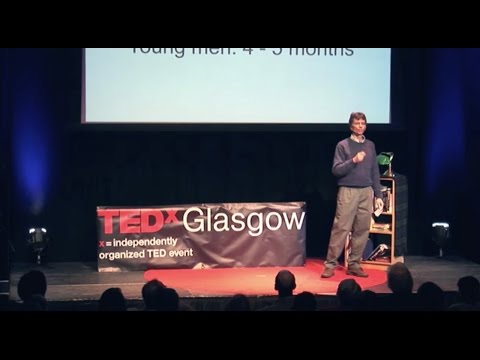
The great porn experiment | Gary Wilson | TEDxGlasgow
TEDx Talks
10 HN recommender · 2012–2023
 10 mo on HN
Controlling Your Dopamine For Motivation, Focus & Satisfaction
Andrew Huberman
12 HN recommender · 2021–2024
 9 mo on HN
Personal Growth Series: Dr. William Dement on Healthy Sleep and Optimal Perfo...
Google TechTalks
6 HN recommender · 2008–2024
 9 mo on HN
Joe Rogan Experience #1109 - Matthew Walker
PowerfulJRE
12 HN recommender · 2018–2020
 7 mo on HN
Master Your Sleep & Be More Alert When Awake
Andrew Huberman
7 HN recommender · 2021–2024
 6 mo on HN
What Alcohol Does to Your Body, Brain & Health
Andrew Huberman
7 HN recommender · 2022–2023
 7 mo on HN
You Actually Share Your Brain With a Silent Stranger
CGP Grey
7 HN recommender · 2016–2025
4 comments from Hacker News
A good counterexample is Robert Sapolsky. He uses a lot of storytelling and anecdotes in his scientific teachings and lectures. His writing is amazing, his lectures even more so. Here's an example lecture: ▶ this video
The parent comment mentions Robert Sapolsky and I can't resist linking a talk where he explores various physical and environmental factors that influence human actions - ▶ this video If anyone finds the video above interesting, also check out his Behavioural Biology lecture series on YouTube - link His upcoming book can be found here - link
I think if you take the view of modern genetics, admittedly I'm a layman on this topic, this is an often useless, antiquated (nature vs nurture) reductive trope. Despite what genetics may code for, our actions are a sum of intrinsic and extrinsic factors. Genetics being one, epigenetics potentially another as well as upbringing, culture, diet and multitudes of other factors. Someone with psychopathy may produce positive societal results even to the benefit of himself sometimes if conditions favor such behavior although could very well go wrong given another upbringing. I think the implications of labeling these behaviors as "dark" can be a bit too reductionist and can turn into a literal witchhunt if we're not careful although they do provide some sort of utility in patterning human behavior. Edit: Relevant talk by Richard Sapolsky, if interested, which I happily post when I can. ▶ this video
I recently saw a lecture by neuroscientist Robert Sapolsky [1] which discussed the complexities of human violence. We both condone and don't condone violence all the time, depending on social context. And furthers, our ways of expressing violence are varied (even down to tiny things like the silent treatment). We (along with other animals) have always used aggression to enforce social order and obtain social benefit. Perhaps something to think about in a scenario like this. Personally I think it's interesting that some people are so quick to condone aggressive attacks on powerful people, yet have no comment on those powerful people committing lower levels of violence against the masses. It's all social context. [1] ▶ this video