John Cleese vs Extremism
eroosters4 HN recommenders · recommended in 4 months, 2018–2024
commentary · general · evergreen · 2018–2024 on HN
A two-minute John Cleese monologue showing the pathology of extremism, explaining why it feels good and how it drives out moderates.
Shared in heated-discussion threads as a short, witty take on why extremism is appealing.
Up next
 2 mo on HN
This high-speed rail project is a warning for the US
Vox
2 HN recommender · 2022–2023
 4 mo on HN
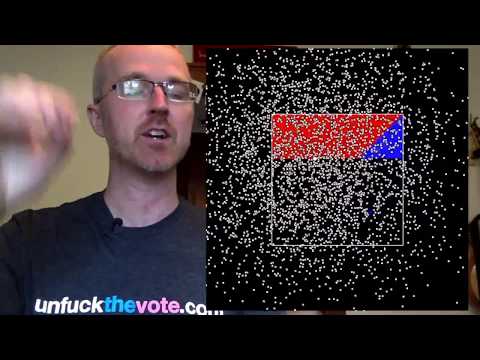
Animated Voting Methods
Unify The Vote
3 HN recommender · 2018–2022
 4 mo on HN
How our voting system (and IRV) betrays your favourite candidate
The Center for Election Science
5 HN recommender · 2014–2023
 3 mo on HN
What P vs NP is actually about
Polylog
4 HN recommender · 2024–2026
 9 mo on HN
Harder Drive: Hard drives we didn't want or need
suckerpinch
12 HN recommender · 2022–2025
 2 mo on HN
Professional SMT Soldering: Hand Soldering Techniques - Surface Mount
John Gammell
2 HN recommender · 2016–2023
 2 mo on HN
Bayes theorem, the geometry of changing beliefs
3Blue1Brown
2 HN recommender · 2022–2024
 5 mo on HN
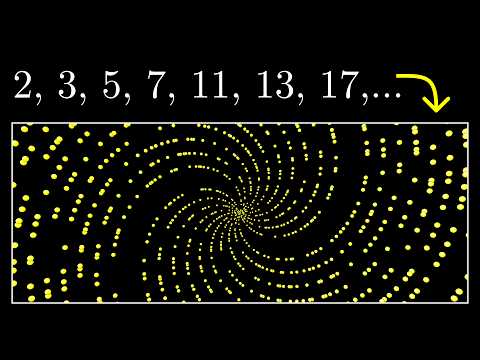
Why do prime numbers make these spirals? | Dirichlet’s theorem and pi approximations
3Blue1Brown
7 HN recommender · 2019–2024
 8 mo on HN
Jackie Chan - How to Do Action Comedy
Every Frame a Painting
9 HN recommender · 2015–2022
 7 mo on HN
George Carlin Talks About "Stuff"
CappyNJ
7 HN recommender · 2010–2026
 5 mo on HN
Captain Disillusion: World's Greatest Blenderer - Live at the Blender Conference 2018
Captain Disillusion
4 HN recommender · 2019–2022
 6 mo on HN
Where in the world is it easiest to get rich? | Harald Eia | TEDxOslo
TEDx Talks
5 HN recommender · 2016–2023
7 comments from Hacker News
These are some really good points. It is reminding me a lot of one of my favorite John Cleese videos[0]. One of the things that I think makes this so difficult is that language has a lot of limits that people don't realize. Since we often don't run into issues with communication (or rather don't notice since the errors are small) it is difficult to realize when we're in boundary cases. For example there's priming[1]. Many may learn that this is a useful way to influence people and many are aware of the psychological experiments, but it is also a fundamental part of how we communicate. We try to communicate the most information with the least amount of words. But this same factor is why good faith arguments are so important but also difficult to maintain. We could not easily converse if we didn't make certain assumptions about another person's views. This is normally fine but we run into problems in heated topics where we often act like someone can only hold an extreme opinion (and of course, mine is not extreme and just common sense). It's the "oh, I've heard this argument before" and while one person may have subtext another may not (why it is difficult to identify dog whistling). Removing nuance from a topic makes it easy, and we like easy things. But that's not beneficial to resolving issues and like you say "leads to a wilderness of mirrors". But it is impossible to tell if priming like this is actively being pushed or naturally happening, since we do have a natural predi
Cleese's 1987 monologue on "extremism" is delightful and well worth the two minutes it takes to watch: What we never hear about extremism is its advantages. Well the biggest advantage of extremism is that it makes you feel good because it provides you with enemies. Let me explain. The great thing about having enemies is that you can pretend that all the badness in the whole world is in your enemies and all the goodness in the whole world is in you. Attractive isn't it? So if you have a lot of anger and resentment in you anyway, and you therefore enjoy abusing people, then you can pretend that you're only doing it because these enemies of yours are such very bad persons, and that if it wasn't for them you'd actually be good-natured and courteous and rational all the time. ▶ this video
See John Cleese on Extremism ▶ this video The "you're either with us or against us" mentality leads to the eradication of moderates and further extremism. A healthy society needs balance. How can we counteract this?
Left and right extremism seems to be taking over the conversation worldwide these days. It's creeping in everywhere. What is most scary is that it is likely going to have to get much worse before it gets better.. Somebody posted this and it about sums it all up: John Cleese vs Extremism ▶ this video .
Your argument that Russia is solely responsible for destabilizing the region mirrors a familiar rhetorical pattern seen throughout history, where weaker powers are trapped in a Kafka trap[1]. Any resistance or reaction by the weaker side justifies further aggression from the stronger power, leading to their gradual erosion and disappearance through salami slicing tactics[2]. Whether through territorial encroachment or strategic isolation, the larger power frames its actions as purely defensive while the weaker party’s responses are cast as irrational or self-destructive. For historical examples, you can look at Carthage under the Romans prior to the Third Punic War, the Saxons under the Normans after Hastings, or the Native Americans under the United States. There are others. For contemporary examples, you can look at the Palestinians under the Israelis (or the Israelis not-quite-under the Arab world) or even the Ukrainians themselves under the Russians! In each of these struggles, the dominant hegemon and its allies want a dominated rival that is "stable, economically entwined with limited influence on their neighbors beyond economic ties. No tendrils of malevolent influence or proxies." Which is to say, totally compliant with their controller and inert as a geopolitical force as they are salami sliced at will. Russia's response to NATO's expansion is a contemporary example of this. Much like other weaker states in history facing incremental encroachment, Russia is blamed fo
I once read a tweet saying this: > Again, say what you want about where it's gone if that's your thing, but stripped down the core of wokeness is "people should be more sensitive to marginalized communities" is it not? Once you get the swinging dick culture war BS out of the way, that's the original impulse right? I'll reproduce my answer here since it goes into detail on why people react badly to wokeness: --- This kind of sentiment gets expressed often, but I'm skeptical of it being the original impulse, given a lot of the woke theory's roots in neo-Marxism and the like. For a lot of the average people who go along with it, that kind of impulse is how it sneaks itself in. People want to be kind, and wokeness speaks of kindness in a way. But ultimately kind, it ain't. For example, a person who really was concerned about racism would be pleased to hear people were not racist - the world's a better place with a little less racism in it. But that's not the activists' reaction, is it? They vehemently deny it's possible to be not-racist - you have to be actively antiracist (ie. actively onboard with their specific program, other ways of getting to the goal are wrong) or you're a racist (and thus need to be pressured to get on with the program). Both positions allow the activist control over the other person - them not being a racist would mean the activist can't exert pressure on them, since they're already not racist and there's nothing to fix. The person can go on with their li
Fair. I feel like some of the communities finally found their voice and their patience for extremism peaked a couple/few years back but.. I also went from consuming most games journalism to barely reading any, so perhaps I'm just not exposed to the drama anymore. Seem to be a lot less drama in the OSS/software world though. John Cleese vs Extremism seems relevant: ▶ this video