Dr. Chris Mack Toasts the End of Moore's Law at SPIE Advanced Lithography 2014
SPIETVCited 4× on HN, 2015–2020
talk · intermediate · 2015–2020 on HN
A brief toast by lithography expert Chris Mack at SPIE Advanced Lithography 2014, humorously declaring the end of Moore's Law. His argument centers on the cost per transistor no longer falling.
HN cites it when arguing Moore's Law is really about price per transistor and that this economic trend has stalled.
Up next
 18 mo on HN
Indistinguishable From Magic: Manufacturing Modern Computer Chips
Andor Gafotas
19 HN recommender · 2016–2024
 8 mo on HN
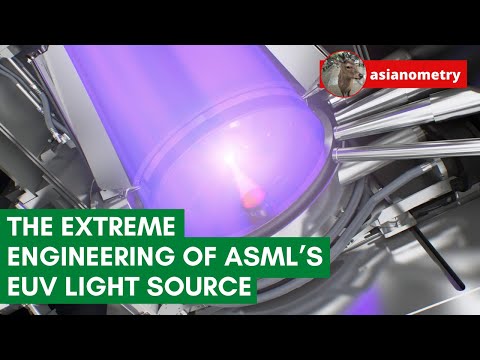
The Extreme Engineering of ASML’s EUV Light Source
Asianometry
11 HN recommender · 2022–2025
 8 mo on HN
Jim Keller: Moore's Law, Microprocessors, and First Principles | Lex Fridman Podcast #70
Lex Fridman
8 HN recommender · 2020–2023
 8 mo on HN
Jim Keller: Moore’s Law is Not Dead
UC Berkeley EECS
7 HN recommender · 2019–2025
 7 mo on HN
Why It Was Almost Impossible to Make the Blue LED
Veritasium
10 HN recommender · 2024–2026
 5 mo on HN
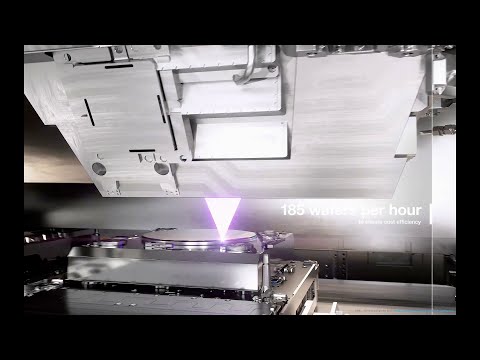
38C3 - From Silicon to Sovereignty: How Advanced Chips are Redefining Global Dominance
media.ccc.de
5 HN recommender · 2025–2026
 5 mo on HN
The man who almost faked his way to a Nobel Prize
BobbyBroccoli
6 HN recommender · 2022–2023
 5 mo on HN
AWS re:Invent 2016: Tuesday Night Live with James Hamilton
Amazon Web Services
5 HN recommender · 2016–2023
 4 mo on HN
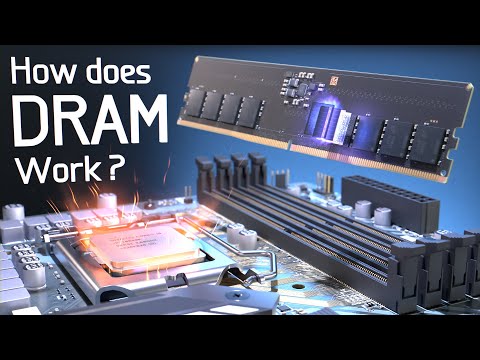
How does Computer Memory Work? 💻🛠
Branch Education
5 HN recommender · 2022–2023
 4 mo on HN
"Z2" - Upgraded Homemade Silicon Chips
Sam Zeloof
4 HN recommender · 2021–2026
 4 mo on HN
The Extreme Physics Pushing Moore’s Law to the Next Level
Seeker
5 HN recommender · 2019–2023
 4 mo on HN
Building a 6800 CPU on an FPGA with nMigen (part 1)
Robert Baruch
3 HN recommender · 2020–2021
4 comments from Hacker News
There's another completely different theory. I'm not saying it's strictly true but it's worth thinking. Moore's law has ended around 2016 or so. As progress is slowing, CPU technology is commoditizing. Successive Intel CPU models aren't much faster than previous ones anymore. So all the manufacturers will just end up in the same place and will only compete on price. We will end up running everything on very efficient cores, massively parallelized. The software frameworks for that will be very different from current ones. This is a polemic version from 2014: Cost of transistors stopped decreasing. ▶ this video
Dr Chris Mack's argument is that Moore's law is about price per transistor. That did not decrease in Intel's last process step, and thus they declared Moore's law dead already in 2014. ▶ this video
This is where 450mm wafers and EUV (extreme ultraviolet lithography) were supposed to come in. EUV relieves the need for double patterning and the tremendous additional costs that entails (and was used to manufacture this 7nm chip). The CEO of Applied Materials, Gary Dickerson, has stated that the 450mm wafer timeline “has definitely been pushed out from a timing standpoint.” That’s incredibly important, because the economics of 450mm wafers were tied directly to the economics of another struggling technology — EUV. EUV is the follow-up to 193nm lithography that’s used for etching wafers, but it’s a technology that’s spent over a decade mired in technological problems and major ramp-up concerns. Toasting to the death of Moore's Law: ▶ this video
Chris Mack has been vocal on this. And not only was he probably right about Moore's Law (defined as scaling that decreases the cost per transistor) being dead last year[1] (the cost per transistor curve has been flattening out), but now Intel can't even keep pace with process shrinks at any price the market will bear . That doesn't mean progress will stop , however[2], but rather that progress (and a revised definition of Moore's Law) will be defined by chip redesigns and particularly specialized functionality that doesn't take many gates to implement but makes chips more valuable. [1] ▶ this video [2] link