The Psychology of Human Misjudgement - Charlie Munger Full Speech
Vikas Ojha2 HN recommenders · recommended in 2 months, 2023–2024
lecture · general · evergreen · 2023–2024 on HN
A recording of Charlie Munger's 1995 Harvard speech on the psychology of human misjudgment. He walks through a list of cognitive biases such as incentives, social proof, and overoptimism.
HN recommends it as an insightful catalog of the biases that drive bad decisions, and links it often in Munger memorials and self-improvement threads.
Up next
 4 mo on HN
Anders Hejlsberg on Modern Compiler Construction
Kasper
4 HN recommender · 2018–2023
 1 mo on HN
The Cult of Conformity in Silicon Valley
Y Combinator
2 HN recommender · 2023–2023
 11 mo on HN
Designing the Ideal Bootstrapped Business with Jason Cohen
Rob Walling
13 HN recommender · 2020–2024
 8 mo on HN
Jim Keller: Moore's Law, Microprocessors, and First Principles | Lex Fridman Podcast #70
Lex Fridman
8 HN recommender · 2020–2023
 5 mo on HN
The Evolution of Bacteria on a “Mega-Plate” Petri Dish (Kishony Lab)
Harvard Medical School
6 HN recommender · 2016–2026
 3 mo on HN
Morris Chang, in conversation with Jen-Hsun Huang
Computer History Museum
3 HN recommender · 2012–2023
 10 mo on HN
"Performance Matters" by Emery Berger
Strange Loop Conference
12 HN recommender · 2019–2025
 2 mo on HN
CBTC: Communications-Based Train Control
mtainfo
2 HN recommender · 2015–2022
 15 mo on HN
1. Introduction to Human Behavioral Biology
Stanford
15 HN recommender · 2012–2026
 13 mo on HN
Essential Ideas for Parents
Jason Salotti
9 HN recommender · 2015–2025
 13 mo on HN
The Century of the Self (Full Adam Curtis Documentary)
David Lessig
13 HN recommender · 2016–2026
 12 mo on HN
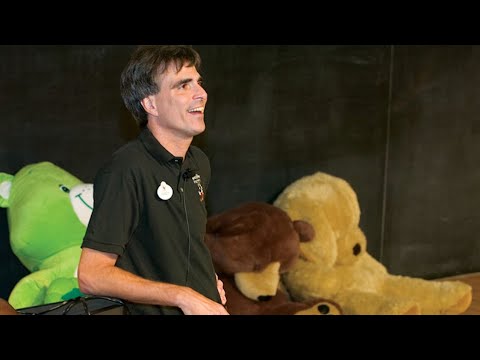
Randy Pausch's Last Lecture: Achieving Your Childhood Dreams
Carnegie Mellon University
12 HN recommender · 2008–2023
5 comments from Hacker News
> they've created a bespoke system of abstract beliefs swatcoder, can you please tell me how you particularly manage to learn from your mistakes? Some people create personal theories of how the world works, and then put their theories into action : A successful example is Charlie Munger and heres his talk explaining some of his excellent theories: ▶ this video Some people overthink things and label things. That can be unhealthy, and Adam touches on that with his "Stroking the problem" section. But the opposite can be unhealthy too: not thinking at all and repeating over and over making the same mistakes. > catchy names Useful when communicating with others if it is an uncommon concept. I like to search for the perfect word or perfect catchphrase when thinking about a problem or solution because it helps my thinking. > various example cases How do you do it? Don't you look at specific issues you find in your own life? Examples yes? And then generalise from that? I just don't understand what you're complaining about. The closest I can think is that you're anti-intellectual or you're a "Just do it" prosyletiser - the implication being that thinking is unnecessary and the problem. Academic over-thinking is its own problem: is that your issue? Like most things: we need to find the right balance. Thinking too little is bad in a different way from thinking too much. > intellectualize and systematize and engineer things I'm just gobsmacked at your choice of words: is systemizing and engin
I'm not necessarily the biggest Charlie Munger fan, but I think he's got some wisdom and found his 1995 speech he gave on human biases at Harvard to be insightful and interesting: "The Psychology of Human Misjudgment" ▶ this video
That linked is the revised version A transcript of the original speech at Harvard, June 1995, should be e.g. at link A recording of the original speech is at ▶ this video
A transcript of the original speech at Harvard, June 1995, should be e.g. at link ... A recording of the original speech is at ▶ this video
Charlie used a quote from George Bernard Shaw's play “In the last analysis, every profession is a conspiracy against the laity.” I personally wonder how many therapists say “you’re fixed, I don’t need any more of your money”. The quote on management consultants was just one example of how many professionals act this way towards businesses, and how it wasn't only about money but also a subconscious, psychological tendency. “The guy tells you what is good for him, and he doesn’t recognize that he’s doing anything wrong any more than that doctor did when he was pulling out all those normal gallbladders.” ▶ this video Transcript: link