Making Microchips at Home - Cooking with Jeri Part1
Jeri EllsworthCited 5× on HN, 2014–2023
tutorial · intermediate · evergreen · 2014–2023 on HN
Jeri Ellsworth shows early steps of making microchips at home: cleaving wafers, removing native oxide, testing dopant type with a hot probe, and loading the furnace.
HN points to it as the example of someone making integrated circuits at home.
Up next
 18 mo on HN
Indistinguishable From Magic: Manufacturing Modern Computer Chips
Andor Gafotas
19 HN recommender · 2016–2024
 8 mo on HN
The Extreme Engineering of ASML’s EUV Light Source
Asianometry
11 HN recommender · 2022–2025
 8 mo on HN
Jim Keller: Moore's Law, Microprocessors, and First Principles | Lex Fridman Podcast #70
Lex Fridman
8 HN recommender · 2020–2023
 8 mo on HN
Jim Keller: Moore’s Law is Not Dead
UC Berkeley EECS
7 HN recommender · 2019–2025
 7 mo on HN
Why It Was Almost Impossible to Make the Blue LED
Veritasium
10 HN recommender · 2024–2026
 5 mo on HN
38C3 - From Silicon to Sovereignty: How Advanced Chips are Redefining Global Dominance
media.ccc.de
5 HN recommender · 2025–2026
 5 mo on HN
The man who almost faked his way to a Nobel Prize
BobbyBroccoli
6 HN recommender · 2022–2023
 5 mo on HN
AWS re:Invent 2016: Tuesday Night Live with James Hamilton
Amazon Web Services
5 HN recommender · 2016–2023
 4 mo on HN
How does Computer Memory Work? 💻🛠
Branch Education
5 HN recommender · 2022–2023
 4 mo on HN
"Z2" - Upgraded Homemade Silicon Chips
Sam Zeloof
4 HN recommender · 2021–2026
 4 mo on HN
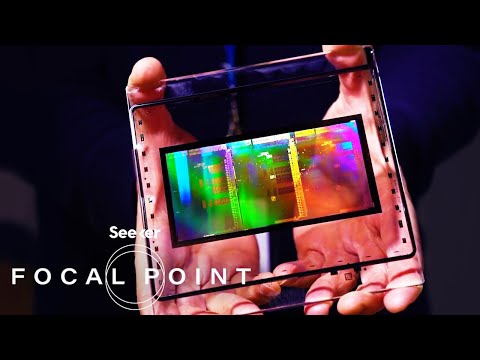
The Extreme Physics Pushing Moore’s Law to the Next Level
Seeker
5 HN recommender · 2019–2023
 4 mo on HN
Building a 6800 CPU on an FPGA with nMigen (part 1)
Robert Baruch
3 HN recommender · 2020–2021
5 comments from Hacker News
If optics and photolithography interest you I recommend Huygens Optics on YT [0]. Jeroen, the creator, has an engrossing passion for the material. Jeri's process [1] is wild compared to Sam's lab. [0] link [1] ▶ this video
Jeri Ellsworth has built working transistors at home. Point contact germanium BJT: link Etched silicon FET: ▶ this video The rusty razorblade + pin point contact diode doesn't need anything special because it's a Schottky diode, with a metal/N-type semiconductor junction. If you probe lots of places you can find an N-type region where the dopant is random impurities. But the transistor needs both N and P-type regions, so I don't see any way to build one with common junk. Jeri's point contact example works by diffusing phosphorus from phosphor bronze into commercially produced N-type germanium using a high current to heat it. Phosphor bronze is arguably household junk but I don't think germanium diodes are.
So it seems like he didn't actually succeed in making the pencil from scratch, or if he did, he didn't blog about it. He did successfully make it to mining the graphite, which is more widely distributed than I would have thought: link Other related projects include: Thomas Thwaites making a toaster from scratch: link That guy who made a ceramic-tile-roofed house with underfloor heating from scratch just posted about adding a kiln and firing more pots: link This one is really "from scratch"; he starts the project (in a previous video) by making stone tools from rocks he found onsite. kd5bjo points out, "Don't forget the Gingery book series on how to build a machine shop!" They build a machine shop starting from scrap metal, starting with a charcoal foundry for casting aluminum and pot metal; there's now a US$75 hardbound edition of what was originally a seven-book series. link Jeri Ellsworth demonstrating how to make integrated circuits at home: ▶ this video The Global Village Construction Set is working on a set of 50 machine designs capable of reproducing themselves: link Of course we all know about the RepRap project that spawned the current proliferation of 3-D printer companies. Project Oberon is one of a few different projects that has a whole self-hosting toolchain including CPU architecture, compiler, networking, GUI, filesystem, and applications in a form comprehensible by a single person; it's free software: link
She didn't do anything remotely this complicated, but a few years ago Jeri Ellsworth did do a couple videos of "homemade" ICs. ▶ this video
i think the word learning is a misnomer here, the term learning in itself is dubious enough look to the best line, and i'd argue one of the most important ideas to ingestively portray to a mainstream population, in 2008 cinema, also an argument could be made to increase that reach.. perhaps in the last decade, century, however hyperbolically you care to extend the reach.. from the film burn after reading(i): CIA Superior: What did we learn, Palmer? CIA Officer: I don't know, sir. CIA Superior: I don't fuckin' know either. I guess we learned not to do it again. CIA Officer: Yes, sir. CIA Superior: I'm fucked if I know what we did. i think what victor is suggesting here would aide moreso in efforts to improve understanding than facilitate a traditional understanding of learning when quantum mechanics was young there was a sudden rush of interest in quantum understanding and one of the modes of expressing improvements in that understanding was to create models(ii) sometimes completely replacing old models, if i remember victor even says bohrs name in relation to this concept this i think is the sorts of things victor is alluding to, stead seeing it as learning think of it as new perspectives to improve understanding.. interestingly though one would have to learn the concepts, both current and avant, in order to know when a new expressive medium improves on the old so knowledge accumulation is a part of this sort of environment, but arguable only subordinate to the true goals the