"Data Driven UIs, Incrementally" by Yaron Minsky
Strange Loop Conference4 HN recommenders · recommended in 4 months, 2018–2022
talk · advanced · evergreen · 2018–2022 on HN
Yaron Minsky of Jane Street shows how the OCaml Incremental library lets trading UIs express data transformations that are easy to read and efficient on streaming data. It includes a live table demo.
Recommended in incremental computation and reactive UI threads as the best conceptual overview of Incremental and incr_dom.
Up next
 11 mo on HN
Principles for Dealing with the Changing World Order by Ray Dalio
Principles by Ray Dalio
10 HN recommender · 2022–2025
 3 mo on HN
John Carmack Tech Talk with UMKC-SCE
UMKC School of Science and Engineering
3 HN recommender · 2017–2023
 11 mo on HN
Maybe Not - Rich Hickey
ClojureTV
14 HN recommender · 2018–2025
 6 mo on HN
The Clean Architecture in Python
Next Day Video
5 HN recommender · 2017–2021
 3 mo on HN
GopherCon 2016: The Design of the Go Assembler - Rob Pike
Gopher Academy
3 HN recommender · 2017–2025
 2 mo on HN
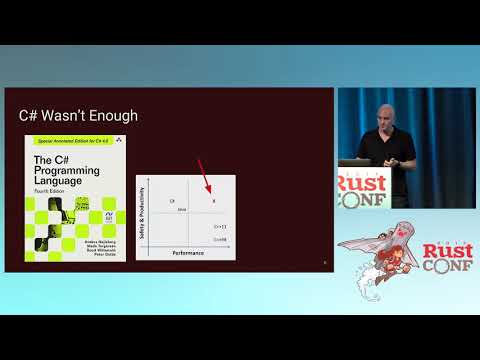
RustConf 2017 - Closing Keynote: Safe Systems Software and the Future of Computing by Joe Duffy
Confreaks
2 HN recommender · 2017–2025
 4 mo on HN
Dtrace Review
GoogleTalksArchive
4 HN recommender · 2013–2026
 11 mo on HN
"Testing Distributed Systems w/ Deterministic Simulation" by Will Wilson
Strange Loop Conference
12 HN recommender · 2014–2024
 18 mo on HN
Ruby Conf 12 - Y Not- Adventures in Functional Programming by Jim Weirich
Confreaks
17 HN recommender · 2013–2026
 14 mo on HN
The Soul of Erlang and Elixir • Sasa Juric • GOTO 2019
GOTO Conferences
16 HN recommender · 2019–2024
 14 mo on HN
"Simple Made Easy" - Rich Hickey (2011)
Strange Loop Conference
14 HN recommender · 2022–2026
 13 mo on HN
"Making Impossible States Impossible" by Richard Feldman
elm-conf
9 HN recommender · 2017–2026
6 comments from Hacker News
Any discussion about incremental UI should include Yaron Minsky's talk about Jane Street's OCaml framework, incr_dom from 2016: ▶ this video Incremental is essentially an implementation of Adapton from 2014: link There is a big upset coming in the UX world as we converge toward a generalized implementation of the "diff & patch" pattern which underlies Git, React, compiler optimization, scene rendering, and query optimization. Two sleeper startups in this space that are going to make a lot of money are Frank McSherry's Materialize Inc. and Nathan Marz's Red Planet Labs. incr_dom source: link Differential Dataflow: link Declarative Dataflow Client: link Crux adapter for Declarative Dataflow: link
Thank you for sharing the write up. I think the model you are describing, has parallels with Yaron Minksy's Data Driven UIs, incrementally ▶ this video Perhaps if you could review the above (if you have not done already), additional ideas/data points might help with your formalization effort.
From what I can tell, incremental computation is starting to be used in practice: Jane St has an OCaml library called Incremental: "Data Driven UIs, Incrementally" by Yaron Minsky at Strange Loop 2018: ▶ this video This talk has a pretty impressive live JS table demo! It looks faster and nicer than most JS UIs I've seen. ----- And the Skip language was developed Facebook. Apparently they started to use it for some production stuff, but somehow they decided against it and spun it out: link link Julien Verlaguet - Reflex: Reactive Programming at Facebook -- link Reflex was an earlier name or earlier incarnation of Skip.
The author just gave a talk at Strange Loop [0] that provides a better conceptual overview than the talk linked in the docs. Pretty interesting stuff. [0] ▶ this video
Very interesting! This somehow seems convergent with the model-level incrementalization approach that incr_dom [1] and its successor bonsai [2] are using. Have you had a chance to compare these? [1]: link | ▶ this video [2]: link
Type-driven development, meta languages, specs, provably correct code, and automatic code generation were some of the big overlapping themes at Strange Loop [1] this year. All the talks posted online this week [2], and I've posted links to some of the related videos below [3]. It's a good indicator that the time has come for an idea when multiple lines of research and projects from disparate domains begin converging on the same idea from different directions. Several facets of the puzzle I've been working the last few years have converged towards this area so it's good to see that it's not just me, maybe that means we're all on the right track. But as 'pron and those who have been working in this area have pointed out [4], this part of the puzzle is not yet solved, and one of the primary open issues is how to scale it to the system level (beyond provably correct programs to provably correct systems). One of the questions I've been pondering is how can we combine provably correct software specs with hardware specs identified for any given system to find the optimal data structures and algorithms given the constraints of that architecture. Does something similar already exist? What's the best software currently out there for simulating ideal data flow for a given hardware configuration and a given set of system constraints? [1] Strange Loop link [2] Strange Loop 2018 talks (80 videos) link [3] Related videos... * Vellvm - Verifying the LLVM, by Steve Zdancewic link * All