Steve Jobs' 2005 Stanford Commencement Address
Stanford9 HN recommenders · recommended in 8 months, 2009–2023
talk · general · evergreen · 2009–2023 on HN
Steve Jobs' 2005 Stanford commencement address, told through three stories: connecting the dots, love and loss, and death. It includes the calligraphy class and the 'stay hungry, stay foolish' close.
HN returns to it for motivation and perspective, and quotes it constantly, especially the connect-the-dots and remembering-death passages.
Up next
 5 mo on HN
Simon Peyton-Jones: Escape from the ivory tower: the Haskell journey
Churchill College, University of Cambridge
5 HN recommender · 2017–2024
 3 mo on HN
The Art of the Bodge: How I Made The Emoji Keyboard
Tom Scott
4 HN recommender · 2018–2024
 11 mo on HN
Jan Willem Nijman - Vlambeer - "The art of screenshake" at INDIGO Classes 2013
Dutch Game Garden
10 HN recommender · 2014–2025
 4 mo on HN
Tomorrow Corporation Tech Demo
retrogameinternals
5 HN recommender · 2023–2026
 3 mo on HN
Learn to Paint with Mathematics
Inigo Quilez
3 HN recommender · 2022–2025
 7 mo on HN
CppCon 2017: Juan Pedro Bolivar Puente “Postmodern immutable data structures”
CppCon
5 HN recommender · 2017–2025
 3 mo on HN
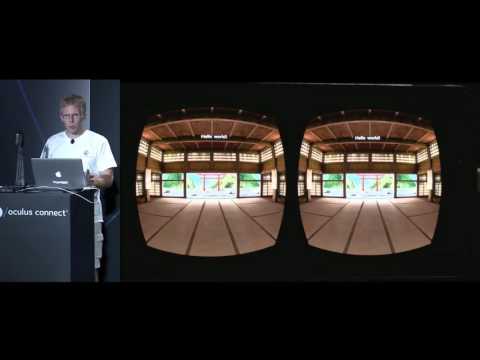
Oculus Connect 2: Live Coding Session with John Carmack
Meta VR
3 HN recommender · 2016–2023
 3 mo on HN
TWiST #46 with David Heinemeier Hansson
ThisWeekinStartups
3 HN recommender · 2010–2014
 16 mo on HN
How to Speak
MIT OpenCourseWare
17 HN recommender · 2020–2025
 11 mo on HN
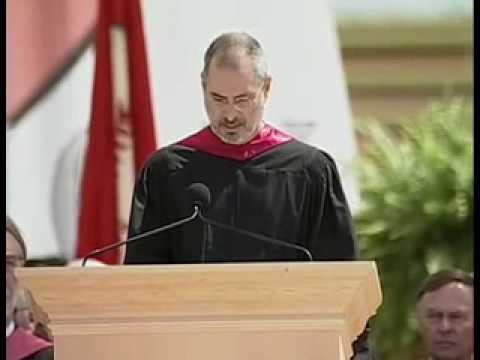
Steve Jobs Stanford Commencement Speech 2005
JoshuaG
13 HN recommender · 2007–2015
 12 mo on HN
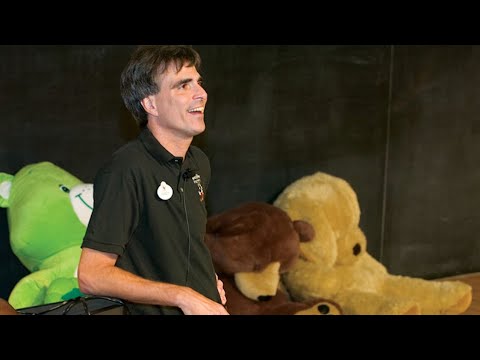
Randy Pausch's Last Lecture: Achieving Your Childhood Dreams
Carnegie Mellon University
12 HN recommender · 2008–2023
 10 mo on HN
Controlling Your Dopamine For Motivation, Focus & Satisfaction
Andrew Huberman
12 HN recommender · 2021–2024
12 comments from Hacker News
“…for the past 33 years, I have looked in the mirror every morning and asked myself: ’If today were the last day of my life, would I want to do what I am about to do today?’ And whenever the answer has been no for too many days in a row, I know I need to change something. Remembering that I'll be dead soon is the most important tool I've ever encountered to help me make the big choices in life.” - Steve Jobs' 2005 Stanford Commencement Address ▶ this video
This was from the commencement speech he gave at Sanford (starts at about 9:10). Not originally his quite, he was paraphrasing something he heard. Great speech, very worth watching for those who haven’t seen it. ▶ this video
Came here to post this Larry Smith link :) Even though Jobs gets some hate on HN, these interviews/speeches have never failed to inspire me. If you don't ask, you don't get - link On a very formulaic life - link (I couldn't find one without the bad bg music) Stay hungry, stay foolish - ▶ this video I do realise, on some levels, he was not a good person, or atleast came off as an ass, but listening to these interviews and speeches, I feel I can relate to him and his struggles.
Great article. It is necessary to be reminded of this some time. I always like to remind myself of Steve Jobs' famous speech where he says something like: "As with all matters of the heart, you know when things are right". Which implies you damn well know when things are not right too. (source: ▶ this video ) Not sure if Steve Jobs is a devil according to this guy.
I watched this speech some 10 years ago and that quote has stuck with me. And particularly the subsequent sentence: "It (death) clears out the old, to make way for the new." This is from Steve Jobs' Stanford 2005 commencement address - ▶ this video (at 12:03)
You're smart, healthy, and 24 years old? There are a lot of older "successful people" that would trade everything they have to be you. Motivation is based on momentum. You're at a standstill now, so you'll have to build up that momentum. Start off with small challenges (sleep, exercise, diet, or whatever) and then take on your big goals once you've got some speed. You may also find Steve Jobs' speech helpful, as a reminder that even people like him were just as confused at times. ▶ this video
Mostly not blog posts, but for the last years I tend to revisit the same resources over and over again for inspiration: - "You and your research" by Hamming, and his video lectures which expand on topics in the original talk: link link - "On teaching mathematics" by V. I. Arnold: link - "Undergraduation" by Paul Graham link - "Learn and relearn your field", and many others in the same category, by Terrence Tao link - Steve Jobs Stanford commencement address: ▶ this video - All articles on programming by Peter Norvig: link
Watch these videos link ▶ this video link I do it whenever i lack motivation. It helps me a lot, I hope it will help you in same way. And you if you really think you want to take a break, Come to Nepal, Its a nice place to be. However its landlocked so you wont find beaches.
An oldie but a great speech (old HN discussion here: link ). For anyone who's interested, here are some other extraordinary commencement speeches: Steve Jobs: ▶ this video Bill Watterson: link David Foster Wallace: link There is a lot of good advice and numerous great sound-bytes from all of these; but one of my personal favorites comes from Bill Watterson, who makes a point that I feel often gets overlooked at HN in our relentless pursuit of success: Creating a life that reflects your values and satisfies your soul is a rare achievement. In a culture that relentlessly promotes avarice and excess as the good life, a person happy doing his own work is usually considered an eccentric, if not a subversive. Ambition is only understood if it's to rise to the top of some imaginary ladder of success. Someone who takes an undemanding job because it affords him the time to pursue other interests and activities is considered a flake. A person who abandons a career in order to stay home and raise children is considered not to be living up to his potential ― as if a job title and salary are the sole measure of human worth. You'll be told in a hundred ways, some subtle and some not, to keep climbing, and never be satisfied with where you are, who you are, and what you're doing. There are a million ways to sell yourself out, and I guarantee you'll hear about them. To invent your own life's meaning is not easy, but it's still allowed, and I think you'll be happier for the trouble.
Yes, those were the last words of Steve Jobs' commencement speech which I quoted above, and he said he quoted it from the Whole Earth Catalog, which he mentioned just prior, in the talk. He had read one of the original editions, since he grew up in that area in those days. And the video of Steve's talk was shared with me soon after it happened, by an older relative, who, ironically, was a top exec at a very large company, which was kind of the antithesis of what Steve was advocating that day. ▶ this video At around 13m10s.
I ran this on steve jobs 2005 video in stanford. It gave me wrong summary. The summary says Jobs gave 3 speeches at Stanford, in 2005, 2006, 2007. Please don't trust the chatGPT blindly. It has limitations as of now. Video - ▶ this video Summary below: >>. Steve Jobs delivered three speeches at Stanford University: one in 2005, one in 2006, and one in 2007. The 2005 speech is about trusting that the dots will connect in one's future, and how that gives confidence to follow one's heart. The 2006 speech is about how one's life destiny is something that can be trusted, and how that leads to happiness. The 2007 speech is about death, and how remembering that one will be dead soon allows one to make the biggest decisions in life with less fear.
Or how Steve Jobs put it: "Again, you can’t connect the dots looking forward; you can only connect them looking backward. So you have to trust that the dots will somehow connect in your future. You have to trust in something — your gut, destiny, life, karma, whatever." Text: link Video: ▶ this video