Antique 4x5 camera creates 20 micron photolithography masks: Super tiny tax form
Applied Science1 HN recommender · recommended in 1 month, 2020–2025
tutorial · intermediate · evergreen · 2020–2025 on HN
Ben Krasnow of Applied Science uses an antique 4x5 view camera to make high-resolution photolithography masks in a home shop. He photographs a poster-sized printout onto litho film to get features around 20 microns.
Cited as an accessible way to make lithographic masks at home, in threads about hobbyist chip fabrication.
Up next
 18 mo on HN
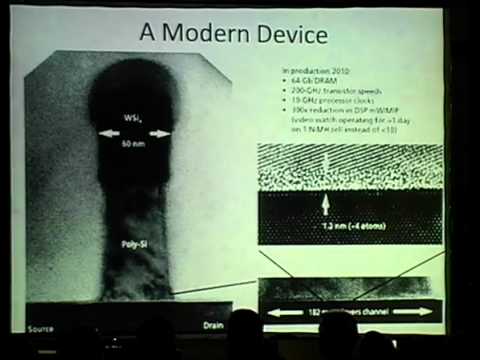
Indistinguishable From Magic: Manufacturing Modern Computer Chips
Andor Gafotas
19 HN recommender · 2016–2024
 8 mo on HN
The Extreme Engineering of ASML’s EUV Light Source
Asianometry
11 HN recommender · 2022–2025
 8 mo on HN
Jim Keller: Moore's Law, Microprocessors, and First Principles | Lex Fridman Podcast #70
Lex Fridman
8 HN recommender · 2020–2023
 8 mo on HN
Jim Keller: Moore’s Law is Not Dead
UC Berkeley EECS
7 HN recommender · 2019–2025
 7 mo on HN
Why It Was Almost Impossible to Make the Blue LED
Veritasium
10 HN recommender · 2024–2026
 5 mo on HN
38C3 - From Silicon to Sovereignty: How Advanced Chips are Redefining Global Dominance
media.ccc.de
5 HN recommender · 2025–2026
 5 mo on HN
The man who almost faked his way to a Nobel Prize
BobbyBroccoli
6 HN recommender · 2022–2023
 5 mo on HN
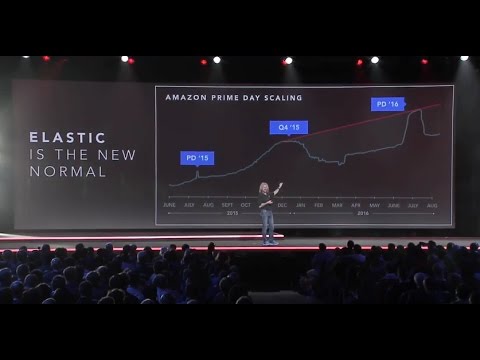
AWS re:Invent 2016: Tuesday Night Live with James Hamilton
Amazon Web Services
5 HN recommender · 2016–2023
 4 mo on HN
How does Computer Memory Work? 💻🛠
Branch Education
5 HN recommender · 2022–2023
 4 mo on HN
"Z2" - Upgraded Homemade Silicon Chips
Sam Zeloof
4 HN recommender · 2021–2026
 4 mo on HN
The Extreme Physics Pushing Moore’s Law to the Next Level
Seeker
5 HN recommender · 2019–2023
 4 mo on HN
Building a 6800 CPU on an FPGA with nMigen (part 1)
Robert Baruch
3 HN recommender · 2020–2021
4 comments from Hacker News
There is a great video on creating lithographic masks on Ben Krasnow's Applied Science channel - ▶ this video The photographic steps are pretty accessible.
Wow, essentially an extraordinarily large view camera built around a repurposed lens, then converted into a depth-of-field adapter[0] in lieu of a digital back. There's actually a known technique for taking wide angle photographs with depth of field this shallow using only a typical long lens:[1] stitching together frames to build a wider field of view is all that's needed; long lenses all have shallow DoF by nature.[a] This interestingly can also be used to explain why the episcope lens has such shallow DoF: its focal length of 432 mm would make it a super telephoto lens, yet its large image circle means it has a wide-angle field of view. If it were replaced by a telephoto lens with the same focal length and aperture but a smaller image circle, and that lens were swung around in a spiral to 'paint' the same area as the episcope lens image circle, the two lenses would produce the same result, only the episcope lens can do it all at once instead of needing multiple exposures. [0] link [1] link -- [a] Annoyingly, I still don't know a satisfying explanation of why depth of field depends on subject/background distances, aperture, focal length, etc. The formulas exist, but every attempt at intuitive explanation I've seen has been incomplete or incorrect. Here's some videos to show those who say that longer lenses have shallower DoF solely because reframing by standing farther away from the subject causes the background and its blur to become relatively larger: link link (O
I recall this but don't remember seeing anything smaller being posted. Sub 100nm for a hobbiest would be pretty awesome. ▶ this video
Oops, second vid should be from Ben Krasnow’s (bkraz) Applied Science channel: ▶ this video Ben explains somewhere in there that this was done to help create a better substrate for the first experiment.