Have the Boomers Pinched Their Children’s Futures? - with Lord David Willetts
The Royal InstitutionRecommended by 3 HN commenters across 3 months, 2021–2024
lecture · general · evergreen · 2021–2024 on HN
Lord David Willetts argues at the Royal Institution that the post-war baby boomers gained wealth and security at the expense of younger generations. He draws on his book The Pinch, covering housing, wealth and social policy in the UK.
HN commenters point to it as a clear exposition of intergenerational unfairness in housing and wages, especially from a UK angle.
Up next
 6 mo on HN
Why Electronic Voting is a BAD Idea - Computerphile
Computerphile
Recommended 7× on HN · 2015–2025
 2 mo on HN
Fatboy Slim - The Rockafeller Skank | Het verhaal achter het nummer
Top 2000 a gogo
Recommended 2× on HN · 2021–2021
 11 mo on HN
What Happened to Horses Is Happening to Us
CGP Grey
Recommended 11× on HN · 2014–2026
 10 mo on HN
Winners Take All | Anand Giridharadas | Talks at Google
Talks at Google
Recommended 9× on HN · 2018–2026
 10 mo on HN
The Coming Collapse of the Middle Class with Elizabeth Warren
University of California Television (UCTV)
Recommended 10× on HN · 2008–2022
 8 mo on HN
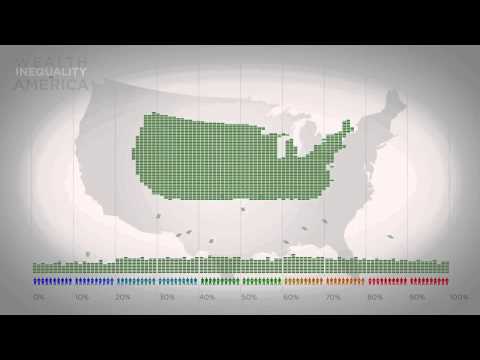
Wealth Inequality in America
politizane
Recommended 8× on HN · 2013–2025
 8 mo on HN
Roblox Pressured Us to Delete Our Video. So We Dug Deeper.
People Make Games
Recommended 9× on HN · 2021–2026
 7 mo on HN
Immigration, World Poverty and Gumballs
NumbersUSA
Recommended 7× on HN · 2013–2024
 6 mo on HN
Democracy at Work: Curing Capitalism | Richard Wolff | Talks at Google
Talks at Google
Recommended 6× on HN · 2017–2026
 6 mo on HN
I Tried To Make Something In America (The Smarter Scrubber Experiment) - Smarter Every Day 308
SmarterEveryDay
Recommended 6× on HN · 2025–2026
 6 mo on HN
Where in the world is it easiest to get rich? | Harald Eia | TEDxOslo
TEDx Talks
Recommended 5× on HN · 2016–2023
 6 mo on HN
Milton Friedman - The Negative Income Tax
LibertyPen
Recommended 7× on HN · 2012–2022
6 comments from Hacker News
There is definitely a serious intergenerational fairness issue here. One of the best expositions of the problem I've seen is this talk by Tory peer (and boomer!) Lord David Willetts. ▶ this video
You might find this video interesting from a UK perspective, I suspect with a mix of overlap and difference to the USA: ▶ this video David Willets draws comparison of "boomers" to other generations, and includes what is paid into healthcare vs. what is consumed in a lifetime.
I think a good explanation of the phenomenon is detailed here: ▶ this video (it's a 50 min talk and targets the UK, but it's applicable to the Western world IMHO). The summary is: - People are working more and reaping less and less from their labor - Social security is getting both worse and less accessible for people in the working age - Working people in general have a much harder time entering the house market and when they do the bang for the buck is way worse than in the past - Retirement plans are getting worse and worse - Millennials and younger people will likely have to drastically reduce their carbon footprint by as much as a factor of 8 compared to the previous generations if we want to hit climate goals for the century Apart for the carbon one, the others are things I am also witnessing both in Switzerland and Italy. And with these premises I don't find surprising that people consider "working hard" or even working not worth it.
You are looking at specific instances. For me it's about the systemic, large scale effects of the system. People routinely partake in exploitative systems without ill intent. The examples you provide could be applied in spirit to child labour. Is every instance of child labour immoral? I don't think so. But using the example of, how you as a 15 year old mowed some lawns to defend systemic child exploitation seems to miss the mark for me. I believe not all instances of landlordism are bad, but as a whole its effects on society are very negative. And that remains true even if all landlords were friendly and full of good intentions. The systemic effects remain the same. This talk for example while focused on a different topic covers some of the large scale effects ▶ this video .
Older people being richer is actually a relatively modern phenomenon. Ref: "Have the Boomers Pinched Their Chiren's Futures", David Willets, Royal Society lecture. ▶ this video
Income and wealth after Gen X is trending down for same age groups according to your sources. It also follows the conclusion from this talk [1]. Another thing to keep in mind is with decreasing birth rates, future generations will have a higher tax burden to support the aging costs of the previous generations. [1] ▶ this video