GOG: Preserving Gaming's Past & Future
/noclip2 HN recommenders · recommended in 2 months, 2018–2025
documentary · general · evergreen · 2018–2025 on HN
A /noclip documentary on GOG, covering how it finds and re-releases classic games and pushes DRM-free releases. It also touches on the company's origins in Poland.
HN points to it as a good documentary on GOG's history and the difficulty of tracking down rights holders.
Up next
 17 mo on HN
8 Bit & '8 Bitish' Graphics-Outside the Box
GDC Festival of Gaming
13 HN recommender · 2018–2026
 12 mo on HN
Reverse emulating the NES to give it SUPER POWERS!
suckerpinch
12 HN recommender · 2018–2025
 10 mo on HN
The Ultimate Game Boy Talk (33c3)
media.ccc.de
10 HN recommender · 2017–2026
 9 mo on HN
How Crash Bandicoot Hacked The Original Playstation | War Stories | Ars Technica
Ars Technica
13 HN recommender · 2020–2026
 9 mo on HN
The Engoodening of No Man's Sky
Internet Historian
9 HN recommender · 2020–2025
 10 mo on HN
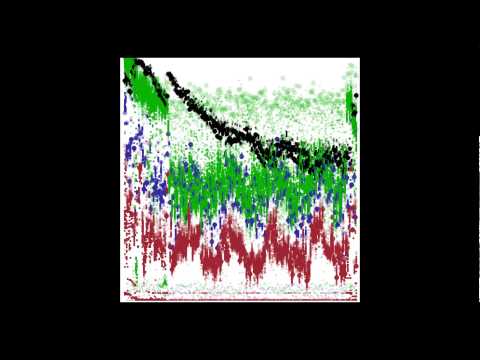
Computer program that learns to play classic NES games
suckerpinch
9 HN recommender · 2015–2025
 9 mo on HN
SNES Code Injection -- Flappy Bird in SMW
SethBling
9 HN recommender · 2016–2025
 7 mo on HN
'Diablo': A Classic Game Postmortem
GDC Festival of Gaming
8 HN recommender · 2018–2023
 7 mo on HN
FIXING the ENTIRE SM64 Source Code (INSANE N64 performance)
Kaze Emanuar
7 HN recommender · 2022–2025
 6 mo on HN
How we fit an NES game into 40 Kilobytes
Morphcat Games
6 HN recommender · 2019–2026
 6 mo on HN
Old pinball machines are amazingly complex
Technology Connections
6 HN recommender · 2023–2026
 5 mo on HN
Classic Game Postmortem: Sid Meier's Civilization
GDC Festival of Gaming
4 HN recommender · 2017–2021
6 comments from Hacker News
An interesting point from the history of GOG is that it originated from a market where piracy was the norm, Noclip has a great documentary about it: ▶ this video
Noclip did an interesting documentary about GOG. "GOG: Preserving Gaming's Past & Future" ▶ this video
GOG shows that paying for drm-free games in a country where copyright was unenforced and piracy offered a better UX can still be profitable: link , ▶ this video
I'm sure this was alluded to in NOCLIP's YouTube documentary on GOG[0]. It was said then that half of the battle was tracking down rights holders as IP had sometimes been absorbed through multiple acquisitions by the time they came to restore some games. [0] - ▶ this video
Something else to consider is motivating piracy. If they sell a piece of software for a flat price in all geos, the ones who can't afford it will invest more time in pirating the software. As a side effect, piracy is normalized in those communities as a necessary way of life in the digital world. Naturally, their tools and methods will leak out to other communities and make piracy easier in places that CAN afford them. Devs would rather sell to those communities at a "loss" than ostracize them and deal with the fallout. Check out this brief description of how software proliferated in Poland during the early years of computers (3:09-8:27): ▶ this video
GOG.com[1][2][3] revives and preserves old video games. [1] gog.com [2] link [3] GOG: Preserving Gaming's Past & Future Documentary: ▶ this video