Richard Feynman: "What's the name of a bird?"
Yves Messer1 HN recommender · recommended in 1 month, 2016–2026
commentary · general · evergreen · 2016–2026 on HN
A short clip from a 1973 NOVA episode in which Richard Feynman recalls his father teaching him that knowing the name of a bird in many languages tells you nothing about the bird.
Reached for whenever a thread touches on naming versus actually understanding something.
Up next
 16 mo on HN
How to Speak
MIT OpenCourseWare
17 HN recommender · 2020–2025
 9 mo on HN
Confessions of a Converted Lecturer: Eric Mazur
UMBCtube
9 HN recommender · 2009–2023
 10 mo on HN
Marty Lobdell - Study Less Study Smart
Pierce College District WA
6 HN recommender · 2015–2024
 9 mo on HN
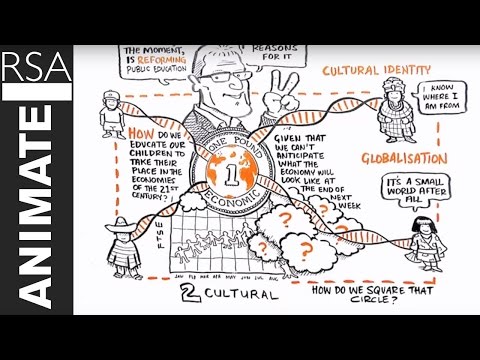
RSA ANIMATE: Changing Education Paradigms
Royal Society of Arts
10 HN recommender · 2011–2026
 8 mo on HN
Alan Kay: Doing with Images Makes Symbols (Full Version)
Kenneth Friedman
8 HN recommender · 2016–2023
 7 mo on HN
CppCon 2015: Kate Gregory “Stop Teaching C"
CppCon
7 HN recommender · 2016–2025
 6 mo on HN
LEADERSHIP LAB: Writing Beyond the Academy 1.23.15
UChicago Social Sciences
4 HN recommender · 2020–2025
 6 mo on HN
Veritasium: What Everyone Gets Wrong About AI and Learning – Derek Muller Explains
Perimeter Institute for Theoretical Physics
6 HN recommender · 2025–2026
 5 mo on HN
The Expert Myth
Veritasium
6 HN recommender · 2022–2026
 6 mo on HN
The Biggest Myth In Education
Veritasium
7 HN recommender · 2021–2024
 6 mo on HN
The first 20 hours -- how to learn anything | Josh Kaufman | TEDxCSU
TEDx Talks
5 HN recommender · 2014–2024
 5 mo on HN
How to learn any language in six months | Chris Lonsdale | TEDxLingnanUniversity
TEDx Talks
5 HN recommender · 2014–2019
9 comments from Hacker News
If you dont mind listening to Richard himself, you can watch this pre-historic 4:3 videos on youtube; ▶ this video link
Richard Feynman: ▶ this video The names of birds. tl;dw: Knowing the name of something gives you no knowledge of that thing even if you can name it in every language but it's super useful to know when communicating with others.
It's not that simple. LLMs are great for predicting next word, but this needs a more unsupervised approach. Ultimately, you need to know the environment of whales. Sure, you know the next probable token, and even relationships between tokens, but how do they relate to what whales are doing? , in other words what does it mean? . It reminds me of the great quote by Feynman: "look at the bird"[1]. You can know the name of a bird in many different languages, but that tells you nothing about it. If you want to understand birds, you need to look at it and see what it's doing. If we want to communicate with another species, we need to understand what they're doing, why they're communicating, and from there we can begin to infer what they're communicating. It could be simply a callsign/identification/name for each individual, it could be communicating you've found a place with food, it could be communicating about predators, who knows. There could be all sorts of interesting variation and nuance to their calls. But ultimately it's necessary to look (in the general sense of having information about what it's doing -- could be through all kinds of sensors!) at the ~~bird~~ whale :) [1] Feynman tells the as a lesson from his father. (that you can know their names and still know nothing about the birds themselves). ▶ this video Bonus related video!: link
Though he does admit [1] > So I had learned already that names don't constitute knowledge... That's caused me a certain trouble since because I refuse to learn the name of anything... What [my father] forgot to tell me was that the knowing the names of things is useful if you wanna talk to somebody else. I think an interview might count :) [1] ▶ this video
I suspect the joy for people versed in classic theory is sparked from being able to identify the name of a recurring concept in a segment of a classical music piece. On a related note: ▶ this video
Richard Feynman had a very good quote on this topic. Effectively, knowing the name of an animal is the least useful knowledge about that animal. ▶ this video
ooooh, I guess God was ok with killing people as long as it was mass killings so you could call it something besides murder. Because apparently the exact name somehow makes the act better (or worse?) in God's eyes. ▶ this video We should go tell Feynman he's nuts...
Why do they ask about capitals? Relevant Feynman: ▶ this video And nowadays we have google for some added prosthetic knowledge. It's becoming increasingly important to grasp concepts well enough to ask the right questions, but knowing simple unrelated facts by heart becomes irrelevant. At most you have to remember that there was something to remember so you can look it up. edit: can a native speaker guide me on where to set commas correctly :) ?
Totally agreed. However, I've found that learning something new without regards for the actual name for it helps me build a solid, abstract representation in the mind. But like you say, communicating these ideas becomes cumbersome when you don't speak the common language :) And here's Feynman on the same topic: ▶ this video