Richard Feynman - Names Don't Constitute Knowledge
Caitlin SpiesCited 7× on HN, 2017–2022
interview · general · evergreen · 2017–2022 on HN
A short excerpt from a 1973 Yorkshire TV film in which Richard Feynman explains that knowing the name of something is not the same as knowing it.
Shared to end arguments over definitions and terminology, and as a reminder that memorizing names is not understanding.
Up next
 15 mo on HN
The Quantum Conspiracy: What Popularizers of QM Don't Want You to Know
Google TechTalks
Recommended 11× on HN · 2012–2025
 11 mo on HN
James Burke Connections, Ep. 1 "The Trigger Effect"
DRS_Education
Recommended 12× on HN · 2019–2026
 10 mo on HN
Hamming, "You and Your Research" (June 6, 1995)
securitylectures
Recommended 11× on HN · 2012–2023
 9 mo on HN
Why Being Delusional is a Superpower
Veritasium
Recommended 9× on HN · 2020–2024
 8 mo on HN
Is Most Published Research Wrong?
Veritasium
Recommended 8× on HN · 2017–2025
 8 mo on HN
Richard Feynman Fire
nebulajr
Recommended 8× on HN · 2010–2023
 8 mo on HN
Powers of Ten™ (1977)
Eames Office
Recommended 9× on HN · 2012–2025
 6 mo on HN
Feynman on Scientific Method.
seabala
Recommended 6× on HN · 2012–2024
 7 mo on HN
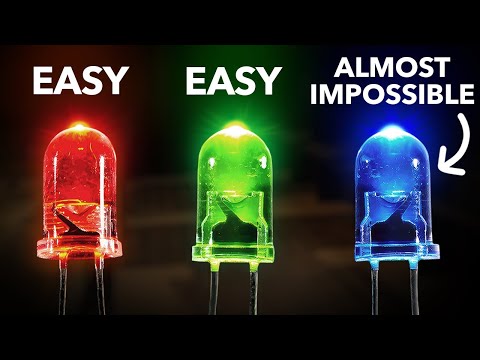
Why It Was Almost Impossible to Make the Blue LED
Veritasium
Recommended 10× on HN · 2024–2026
 6 mo on HN
DEF CON 26 - Svea, Suggy, Till - Inside the Fake Science Factory
DEFCONConference
Recommended 5× on HN · 2018–2025
 7 mo on HN
I promise this story about microwaves is interesting.
Tom Scott
Recommended 9× on HN · 2021–2026
 6 mo on HN
The LED Traffic Light and the Danger of "But Sometimes!"
Technology Connections
Recommended 7× on HN · 2019–2024
7 comments from Hacker News
▶ this video I don't care what you call it, if person A starts mistreating person B and person B knows how to deal with these situations, person A will quickly stop mistreating person B. Your argument here appears to be that bullying if person A doesn't eventually fight back. I don't agree with that, but I'm not willing to argue over the names of things.
Sorry, I'm not reading all of that. I stopped at the second paragraph. The answer to the question doesn't actually matter, not to you, and not to me. It's a ploy to try and confound the conversation. If you and the other poster really feel it needs to be defined, then define cancelled as "the thing that happened to Dorian Abbot". boom, you're done. It now has a definition, tautological, but valid nonetheless. The thing that should be getting discussed is whether or not what happened to him should have happened to him. And the answer is no, it shouldn't happen to anyone. And now I'm going to leave you with an observation by Richard Feynman. ▶ this video
Sure, if you find the phrase "common sense" to be less offensive than "blind faith", but in this case they mean the same thing. ▶ this video
when people start quibbling over words I like to point them to this feynman video. ▶ this video The idea that risk isn't a part of the discussion about why a company is laying off 40% of its work force doesn't seem like it has much merit. The responses made sense, and they've been explained to you. You're just casting about trying to come up with some way to dismiss the other persons point while intellectualizing it for the HN audience. If we were on reddit your tone would be some passive aggressive wiffle waffle about experience or intelligence. The tone might change based upon the site, but the inaneness of the person behind them doesn't.
> Do you know any other examples ▶ this video Where "complex numbers" is Chinese, "imaginary numbers" is German, and "2D numbers" is English in this analogy.
▶ this video > Memorizing state capitals won’t make anybody Governer, but skipping that step early on can be a major derailment from path. “Major derailment”? You can’t be serious. Nobody at my school ever memorized state capitals, and as far as I can tell they’re all doing about as well as you would expect (a couple decades later) in their various careers, including careers as lawyers, activists, policy analysts, journalists, politicians, scholars of political science, ... Anyone who does the real work (reading hundreds of topical books, keeping up with current events for decades, getting involved in political activism, engaging with peers in years of university seminars about related topics, ...) is going to end up having a reasonable grasp of the names of most states and their capitals, but being able to rattle off a list is mostly useless, except as a stunt. > Knowing the names encourages curiosity and inspires asking questions that otherwise could not be asked. Memorizing lists of random trivia engenders boredom and makes kids think school is bullshit. The questions they ask are things like “why are we doing this pointless busywork?” and “why doesn’t my teacher respect kids’ intelligence?”
If there's one thing I definitely don't care about, it's the exact definition of censorship. What I do care about is the idea behind censorship. I will not engage you in any conversation in which you try to use the definition to argue against the point I made. So if you would like to have a discussion about the ideas behind censorship and why the worry is valid for these large websites such as FB and Youtube, I'm all for it. But if you're going to repeat that the definition of the word precludes anything but governments, then I'm not interested. ▶ this video