How I Made My Own iPhone - in China
Strange Parts2 HN recommenders · recommended in 2 months, 2017–2023
documentary · general · evergreen · 2017–2023 on HN
Strange Parts builds a working refurbished iPhone 6S entirely from components bought in the Huaqiangbei phone parts markets in Shenzhen. The video explains how the markets work and what the parts cost.
HN cites it as proof that a full iPhone can be assembled from sourced parts, in right-to-repair and Shenzhen hardware ecosystem discussions.
Up next
 4 mo on HN
Milton Friedman - The Real World Effects Of Unions
LibertyPen
4 HN recommender · 2017–2023
 6 mo on HN
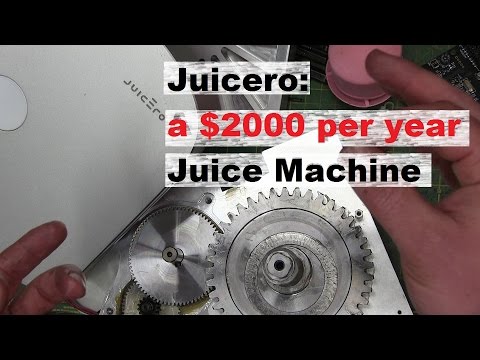
BOLTR: Juicero, Cold Press Juicer for Rich Weirdos
AvE
6 HN recommender · 2017–2026
 7 mo on HN
Longer-lasting light bulbs: it was complicated
Technology Connections
9 HN recommender · 2023–2026
 6 mo on HN
The REAL Reason McDonalds Ice Cream Machines Are Always Broken
Johnny Harris
8 HN recommender · 2021–2025
 5 mo on HN
A Look Inside Apple's $130 USB-C Cable
Adam Savage’s Tested
6 HN recommender · 2023–2026
 5 mo on HN
BOLTR: DYSON HAIR DRYER. Is it WORTH the MONEY?
AvE
4 HN recommender · 2017–2023
 5 mo on HN
The lamps you're not allowed to have. Exploring the Dubai lamps
bigclivedotcom
5 HN recommender · 2021–2026
 4 mo on HN
Tearing Down the Model T of Our Time - Autoline After Hours 284
Autoline Network
6 HN recommender · 2015–2018
 4 mo on HN
This is why we can't have nice things
Veritasium
4 HN recommender · 2021–2024
 3 mo on HN
Tesla Model 3: Inside & Out - Autoline After Hours 417
Autoline Network
5 HN recommender · 2018–2026
 3 mo on HN
What is Right to Repair? An introduction for curious people.
Louis Rossmann
4 HN recommender · 2020–2024
 3 mo on HN
Apple's Independent Repair Program is a useless PR stunt.
Louis Rossmann
3 HN recommender · 2020–2021
8 comments from Hacker News
You addressed the first question, but I popped in to bring up this neat video I came across a few years back regarding the second question. How about this guy, who "built a like-new (but really refurbished) iPhone 6S 16GB entirely from parts purchased from the public cell phone parts markets in Huaqiangbei."? :D link Making-of: ▶ this video
You may enjoy this video where a guy goes to Shenzen and tries to build an iPhone 6s from parts. He claims it cost $300. Technically he spent a little over $600 because he broke a lot of parts and bought the wrong parts in the process, but if everything went perfectly it would be about $300. I think this was created back when the 6s was the current model. $300 claim link build video: ▶ this video
The short answer is, yes they do. It's true that Apple has paired hardware on newer phones, and that combined with Find My has really taken a huge bite out of how many iPhones are stolen, but Shenzhen is Shenzhen. It is a mecca of technology, and you will find things that we'd generally otherwise consider impossible, like building your own iPhone piece by piece just walking around a market: ▶ this video So even if they can't take a given part as-is, they can always find something useful. We'd think "the logic board is paired so it's useless": they'd think "ICs X,Y, and Z on the logic board commonly fail and now we got spares". There's been more than one case of stolen stuff ending up in Shenzhen: link
I do think it's fair for Apple to say, "Hey, we can't ensure this device is properly repaired unless we are the ones to repair it." Maybe some sort of "Apple-certified repair place" program... I think that exists today. I don't think Apple should be forced to sell raw parts; it's not part of their business model. You're free to buy more modular hardware... things you can easily repair. That's a selling point, right? But Apple should be free to do business however they want to do business. You're free not to buy Apple products, but you shouldn't be free, as a consumer, to insist they make schematics and parts available. You can choose to support companies that sell parts if you want! (= EDIT: ▶ this video - seems about as good as you can hope for. Pretty sure Apple isn't keen on "DIY" for their brand.
This is not so easy. The Surface Books are made with a number of snap together modules, via fine cable runs and multi-pin connectors. Each part is made with care and subjected to detailed tests, that include a term of power-on burn in for the major parts with infra-red smart vision that looks for any hot spots (that might lead to failure). Then they are assembled with in progress tests at some points until the final productis made and it is tested after they add the SSD with all the operating system installed. There are assorted areas partitioned on the SSD that might hold an OS recovery partition, as well as other software provided by others as choice ware (since so many people like this so called bloatware not installed). Then it will be placed on a burn-in rack at a higher temperatrure than room temp and some sort of test program will be run on a recurrent basis. Those that pass are packed and shipped, those that fail are analyzed for faults and any faulty part replaced and it is re-tested. A lemon with recurrent faults will probably be gutted to find the part with an enduring fault. Once in the field, it is rare for part level test and repair to be done. Those boards are marked as scrap with dye?? and sold in the scrap boards auction in schenzen. Buyers buy these boards and perform some analysis of them, or simply remove certain high value parts and sell them to other repris shops. Often many parts are tossed because these parts lack detailed information on them abd are n
Slightly different Point of view: HW needs infrastructure. It needs Packages, materials, PCB houses etc ideally all near by, with good transportation networks, etc. That was what ShenZhen was good at. It took very low cost labors and supported government and a lot time to build up. Take a look at this video ▶ this video on how to build IPhone from parts bought in ShenZhen public market to see the supported systems needed for HW. You can imagine how much easier and faster to prototype/build HW (drone, robots, etc) in ShenZhen as compare to anywhere else in the world (for now). As the labor cost goes up in ShenZhen / China, the significant advantages are gone. That's why China is trying to move up via Tech/IP, etc. Same development processes happened in Japan, Korea, Taiwan for the past 40-50 years. All of them start with unskilled Textile -> toy assembly -> Electonic PCB assembly -> PCB Design -> Simple Asic / Systems-> Complex ASIC / Complex Systems. As they move up the food chain, they all "clone / steal / borrow / learn" ip from more developed nations. It is also repeating the process 150 years ago where UK invented the Train/Rail system and US just scaled/improved to much bigger system. History just keep repeating.
On the other hand you can make a full iPhone by buying each of the components if you know where to find them (disclaimer: I've met Scott before): ▶ this video
Yep. In the video comments, he says he spent well over $1000. Justifies the $300 price tag by stating that he didn't need the $700+ worth of parts and tools he purchased. > Strange Parts 4 hours ago > Thanks for subscribing! I spent well over $1000, but a lot of that was parts and tools I didn't end up needing. I'd say it's probably around $300 worth of parts in the actual phone. Source: Direct link to comment: ▶ this video