TASBot plays Brain Age by micro500, xy2_ in 20:06 - Awesome Games Done Quick 2016 - Part 154
Games Done Quick1 HN recommender · recommended in 1 month, 2019–2022
demo · general · evergreen · 2019–2022 on HN
A tool-assisted run of Brain Age by TASBot, shown at Awesome Games Done Quick 2016. The bot gives deliberately deranged answers while exploiting the game's error-prone recognition.
HN points to it as a funny, fun-to-watch example of what TAS can do to a game's input handling.
Up next
 12 mo on HN
SM64 - Watch for Rolling Rocks - 0.5x A Presses (Commentated) [OUTDATED]
pannenkoek2012
13 HN recommender · 2016–2024
 12 mo on HN
Reverse emulating the NES to give it SUPER POWERS!
suckerpinch
12 HN recommender · 2018–2025
 10 mo on HN
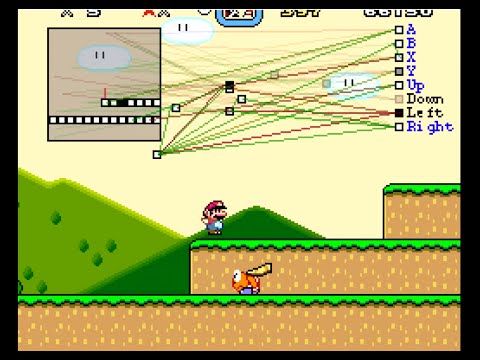
MarI/O - Machine Learning for Video Games
SethBling
10 HN recommender · 2015–2026
 9 mo on HN
SNES Code Injection -- Flappy Bird in SMW
SethBling
9 HN recommender · 2016–2025
 7 mo on HN
FIXING the ENTIRE SM64 Source Code (INSANE N64 performance)
Kaze Emanuar
7 HN recommender · 2022–2025
 4 mo on HN
MyHouse.WAD - Inside Doom's Most Terrifying Mod
Power Pak
4 HN recommender · 2023–2026
 5 mo on HN
How lucky is too lucky?: The Minecraft Speedrunning Dream Controversy Explained
Stand-up Maths
5 HN recommender · 2021–2025
 4 mo on HN
[TAS] Pokémon Yellow - Arbitrary Code Execution
MrWint
4 HN recommender · 2020–2025
 3 mo on HN
TasBlock at AGDQ 2017: TASBot
TASVideosChannel
3 HN recommender · 2019–2025
 3 mo on HN
Did Nintendo really forget to Optimize Super Mario 64 ? | MVG
Modern Vintage Gamer
3 HN recommender · 2020–2022
 3 mo on HN
Walls, Floors, & Ceilings
UncommentatedPannen
3 HN recommender · 2017–2018
 3 mo on HN
[Epilepsy Warning] Choco Mountain: The History of Mario Kart 64's Most Infamous Track
Summoning Salt
3 HN recommender · 2018–2018
3 comments from Hacker News
> e.g the increasingly deranged "correct" answers to TASbot brain age. Video link: ▶ this video It's stupidly funny.
Arbitrary Code Execution TAS like Triforce% or this Pokemon Yellow one[1] are more or less demos that target both the console and the "host game". I would say even some non-ACE ones like this Brainage TAS[2] are demos :D [1] link [2] ▶ this video
By the sound of it this is a problem that neither entities nor their moniedness can solve. I'm sure these companies watch each other, and when one steps on a metaphorical rake the others are likely taking notes on how to avoid it on their future attempt. And yet rakes are still being stepped on. When you have an automated system that has irregular behavior to a given input, we call that a bug. Bugs exist in all software, not always unique, but always present. This software is no different than any other. It will have errors. Because the software is categorizing faces, its errors will result in miscategorizing them. The only relevant questions to this are how frequent these errors are and how disparate they are across racial lines. Another reference: this one is a Tool-Assisted Speedrun of a game that relies on basic image recognition software. While not entirely related, it does show how error-prone these algorithms can be. It's also fun to watch. ▶ this video