Dual Photography
mm6482304 HN recommenders · recommended in 4 months, 2013–2026
demo · intermediate · evergreen · 2013–2026 on HN
The SIGGRAPH 2005 demo of dual photography from Stanford, which swaps the roles of projector and camera to render a scene from the light's point of view. It includes the reveal of a hidden playing card.
Cited whenever threads discuss recovering hidden images or non-line-of-sight imaging, as a clear demonstration of light transport.
Up next
 3 mo on HN
Gender Neutral Pronouns: They're Here, Get Used To Them
Tom Scott
3 HN recommender · 2013–2015
 6 mo on HN
BlueHat IL 2019 - Andrew "bunnie" Huang - Supply Chain Security: "If I were a Nation State...”
Microsoft Israel R&D Center
6 HN recommender · 2019–2024
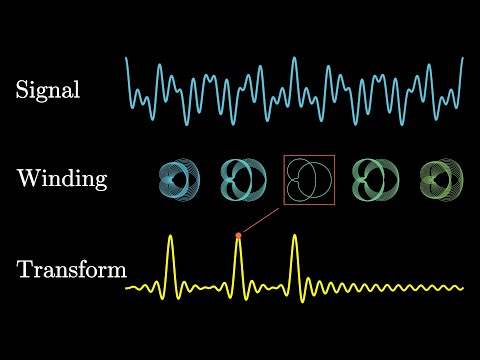 15 mo on HN
But what is the Fourier Transform? A visual introduction.
3Blue1Brown
16 HN recommender · 2018–2025
 6 mo on HN
Cybersecurity as Realpolitik by Dan Geer presented at Black Hat USA 2014
Black Hat
1 HN recommend · 2014–2023
 4 mo on HN
Mark Blyth ─ Global Trumpism
Watson School of International and Public Affairs
3 HN recommender · 2016–2019
 3 mo on HN
Chernobyl 3828
TeleconStudio
2 HN recommender · 2014–2019
 4 mo on HN
Flat Earth: A Measured Response
hbomberguy
3 HN recommender · 2019–2024
 3 mo on HN
TasBlock at AGDQ 2017: TASBot
TASVideosChannel
3 HN recommender · 2019–2025
 13 mo on HN
The Beauty of Bézier Curves
Freya Holmér
16 HN recommender · 2021–2026
 11 mo on HN
The Continuity of Splines
Freya Holmér
10 HN recommender · 2022–2026
 10 mo on HN
elevated by Rgba & TBC | 4k intro (FullHD 1080p demoscene demo)
Demoscene High-Quality Videos (Annikras)
7 HN recommender · 2013–2025
 10 mo on HN
Painting a Character with Maths
Inigo Quilez
13 HN recommender · 2021–2025
10 comments from Hacker News
Dual Photography has always been the optical "trick" that's blown me away. Here's the demo video from Siggraph in 2005: ▶ this video Skip ahead to 4:19 for a succinct demo.
> Does anyone assert that any photon carries information about what it interacted with in the past? Does a photon have any information content other than its energy/wavelength? So "each one carries a bit of the image of whatever it hits" is total (ok, be nice now) poetic blarney. An analogy to how we perceive things seems appropriate. The light from some source (i.e the sun) hits an object, the light rays are then reflected/transmitted/refracted through the surface based on various material properties. Your eye, acting like a pinhole camera, captures all the light rays from that surface, and then projects it onto the sensor reception surface (I think the retina?) creating the 'image' that we see. So the specific way the light rays interacts with the surface is what creates the 'information content'. For example, we perceive a blue-colored surface because the surface properties (i.e roughness) will specifically reflect wavelengths associated with blue. A specular surface will reflect light back to the eye, creating a 'shiny' surface. A very cool demonstration of how light conveys information is in dual photography: ▶ this video And the original paper: link . They shine a light source onto an object, take a picture, and then by processing the light rays in the photo, are able to generate the same scene but from the perspective of the light source. It's really astounding when you see it. They can do this reconstruction because the flow of light rays from the light source to the obj
It sounds like "Dual Photography". link "We present a novel photographic technique called dual photography, which exploits Helmholtz reciprocity to interchange the lights and cameras in a scene. With a video projector providing structured illumination, reciprocity permits us to generate pictures from the viewpoint of the projector, even though no camera was present at that location." I recommend watchign the video from the paper for good explains and demonstrates the technique. It's very impressive work. ▶ this video
This reminds me of dual photography [1], in which you trade many projectors and one camera for one projector and many cameras using time reversal symmetry. The video [2] gives a good explanation, and the revelation of the playing card is what strikes me as similar to revealing reflected hidden faces. [1] link [2] ▶ this video
I've never forgotten this SIGGRAPH demo from almost twenty years ago, in which the authors effectively switch camera and light source computationally (... in a static scene) [1] Ever since then, I have viewed scenes such as the "lingerie store scene" from Enemy of the State [2] with a little bit less eye rolling... [1] - ▶ this video [2] - link
I was immediately reminded of the Dual Photography paper (well, I had to look it up first; I only remembered the "photographing a playing card that is facing away" demo at the end): - link - ▶ this video
Reminds me of this work, aiming to "reverse" the light path between a projector and a camera/photosensor: ▶ this video
This reminds me of dual photography, where one can recover hidden images from diffuse-diffuse light transfer. video: ▶ this video page: link
This reminds me of dual photography: link in the sense that I imagine unscrambling the glittered image will be significantly easier if you can plug in known sources to the transfer matrix. Edit: the video there didn't work for me any more, here's the youtube link ▶ this video
Reminds me a little of "Dual Photography" as presented at Siggraph in 2005. All the data you need to construct a new view is available if you know where and how to look: ▶ this video