The UK Election Results Were the Worst in History
CGP Grey3 HN recommenders · recommended in 3 months, 2015–2022
explainer · general · evergreen · 2015–2022 on HN
CGP Grey explains how the 2015 UK general election showed the flaws of first-past-the-post voting, with parties like UKIP winning many votes but few seats.
HN recommends it as a short, clear illustration of how first-past-the-post misrepresents voters.
Up next
 8 mo on HN
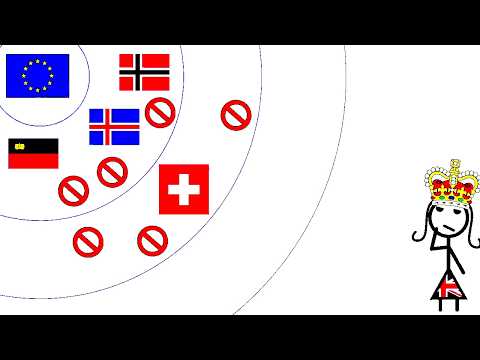
The EU Has Orbits, and the UK Fell Out of All of Them
CGP Grey
7 HN recommender · 2019–2023
 3 mo on HN
Principles of economics, translated
Yoram Bauman
3 HN recommender · 2009–2023
 7 mo on HN
Gwynne Dyer -- Geopolitics in a Hotter World
The University of British Columbia
4 HN recommender · 2018–2023
 9 mo on HN
The Only Unbreakable Law
Molly Rocket
12 HN recommender · 2022–2026
 4 mo on HN
Nintendo - Putting Play First
Game Maker's Toolkit
3 HN recommender · 2017–2025
 3 mo on HN
Defcon 20 - Dan Tentler - Drinking from the caffeine firehose we know as shodan
vissago
3 HN recommender · 2014–2019
 3 mo on HN
The Fall of The Simpsons: How it Happened
Super Eyepatch Wolf
9 HN recommender · 2017–2026
 2 mo on HN
Rich Harris: Futuristic Web Development
Svelte Society
3 HN recommender · 2020–2022
 12 mo on HN
George Lakoff: Moral Politics
University of California Television (UCTV)
3 HN recommender · 2016–2024
 11 mo on HN
Why Electronic Voting Is Still A Bad Idea
Tom Scott
11 HN recommender · 2020–2026
 11 mo on HN
Republic, Lost | Lawrence Lessig | Talks at Google
Talks at Google
10 HN recommender · 2011–2017
 11 mo on HN
Antonin Scalia - On American Exceptionalism
AmericanRhetoric.com
12 HN recommender · 2019–2025
6 comments from Hacker News
> creepy undemocratic bureaucracy of the EU > need for control and action on a local level Ah you mean that local control and democracy when the party with 13% of the votes gets 0.2% seats in the parliament", right? [1] [1] Great CGP Grey video on the 2015 General Election in the UK: ▶ this video
> suggests a lack of representation That's a big can of worms for HN. Suffice to say we have one of the least representative democracies and it's steadily getting worse. First past the post is no longer fit for an electorate that wants to vote increasingly for minor parties. It works where there are just two choices. Individual constituencies, especially safe seats, are often hugely unrepresentative. Finally add demographics that skew the ageing electorate ever more tory, until the baby boom finishes playing out. So that's less North-South more safe seats vs everywhere else. Yet it does often play out North-South most when seeing election results maps. Still Scotland votes overwhelmingly against Conservative, who barely exist in Scotland, yet gets English Tory government. Admittedly they won a couple back in 2017, but I can see why they inch toward independence. It's different this side of the border, but NW and NE England issues are equivalent in scale. CGP Grey summarises it well: ▶ this video I'm trying hard to avoid a political argument. :) > spending does localise in high population areas, no? Well it does, but thanks to the ever increasing centralisation of funding - started in 1974 I think, but especially since replacement of rates with council tax, even high population areas can't compete. The funding Leeds or Manchester gets for infrastructure, services is declining compared to the SE. Even though both are booming, they are permitted to do less per capita. We've ended up
I think you'll appreciate this CGO Grey video: ▶ this video . You're not wrong , but the system is nonetheless extremely misrepresentative.
Thanks for taking the time to think about it. > Democracy itself always gives rights to the majority against the will of the minority. this is true and it has a name I believe; the "Tyranny of the Majority", I think. > The tyranny of the majority (or tyranny of the masses) is an inherent weakness to majority rule in which the majority of an electorate pursues exclusively its own objectives at the expense of those of the minority factions. Unfortunately, as you mentioned, being _more democratic_ ultimately lends itself to being this way. However one neat trick the EU has (and I promise I'm not trying to spin this as pro-EU, as it's only in one place): is that the direct votes are split proportionally. This means that lesser represented groups get a voice in the EU parliament. For the UK with their "First past the post" system, and winner take all government; where a party like UKIP can get 12.6% of all votes and win 0 representation in parliament.... well, lets say it's a stark contrast. explained very nicely; here: ▶ this video The EU voting system (the way in which we elect MEPs to parliament) is detailed in this video by the BBC: link ; as you'll see it's much more representative. I know of other videos that speak pragmatically about the EU, its problems and if it's worth it (though with a slight pro-EU stance): link I also found this video that asks the question if the EU is democratic, which I think makes good points and you can draw different conclusions from it: link I
I'm not from the UK, but CGP grey is AFAIK. He has a short video called "Why the UK Election Results are the Worst in History" (2015). IMO, it seems like First Past the Post voting is the problem still. ▶ this video
> makes it seems like the UK is this corrupt, broke country when it couldn't be further from the truth. If so, how is it that we no longer fund $service adequately any more (where $service is any and all of them)? How is that possible after so much has been privatised leaving so many fewer to fund publicly? Why can't we afford enough police? Why can't we afford adequate library provision? Interesting that parliament keeps their public library though, isn't it? How is it that in a time of highest levels of employment food banks have grown from barely existing to being everywhere? Could it be that policy has resulted in deliberately inadequate welfare provision? How, in a time of such extensive employment, are wage rises barely noticeable? If your definition is a few incoming oligarchs buying up expensive property they never set foot in, or someone putting up a willy waving skyscraper sure UK is doing great. By every other measure, including levels of mental health, poverty, satisfaction etc, UK has effectively shot itself. Oh, and don't hold up Tories being elected as some sort of proof when our democracy is one of the least representative on the planet[1]. Our system is biased both systemically and demographically. It feels like a corrupt, broke country, especially after a visit to London. It feels like somewhere to be deeply embarrassed of, and I mostly am these days. [1] ▶ this video CGP Grey's "Why the UK Election Results are the Worst in History" on the 2015 results.