Yo-Yo Ma Bach Cello Suite No.1 in G Major
Thanyaphong Na nakorn2 HN recommenders · recommended in 2 months, 2018–2021
music · general · evergreen · 2018–2021 on HN
Yo-Yo Ma performs Bach's Cello Suite No. 1 in G Major at the BBC Proms in 2015. It is a full solo cello performance of the suite.
Offered as an entry point to Bach's cello suites, which HN commenters praise for evoking rich harmony from a single line.
Up next
 13 mo on HN
D/A and A/D | Digital Show and Tell (Monty Montgomery @ xiph.org)
FL Studio
15 HN recommender · 2017–2026
 15 mo on HN
Try to Rule Fairly and You'll Be Overthrown
CGP Grey
15 HN recommender · 2016–2025
 3 mo on HN
I BOUGHT A WHOLE CHURCH ORGAN - Part 1 The Organs Removal
LOOK MUM NO COMPUTER
3 HN recommender · 2022–2023
 9 mo on HN
The Century of the Self - Part 1: "Happiness Machines"
JustAdamCurtis
13 HN recommender · 2017–2025
 11 mo on HN
Video explains the world's most important 6-sec drum loop
Landon Proctor
15 HN recommender · 2011–2026
 10 mo on HN
Fear the Boom and Bust: Keynes vs. Hayek - The Original Economics Rap Battle!
Radical Discourse
10 HN recommender · 2010–2024
 6 mo on HN
Adriano Celentano - Prisencolinensinainciusol
Le Pietre Rotolanti
6 HN recommender · 2016–2024
 4 mo on HN
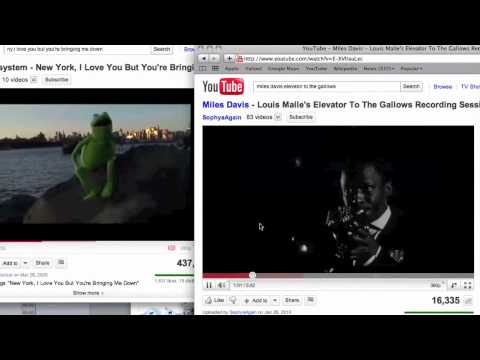
Youtube duet: Miles Davis improvising on LCD Soundsystem
Alessandro Grespan
4 HN recommender · 2021–2024
 5 mo on HN
The Caretaker - Everywhere At The End Of Time - Stages 1-6 (Complete)
vvmtest
5 HN recommender · 2020–2025
 5 mo on HN
Steve Reich, "Music for 18 Musicians" - FULL PERFORMANCE with eighth blackbird
Vic Firth
4 HN recommender · 2016–2025
 5 mo on HN
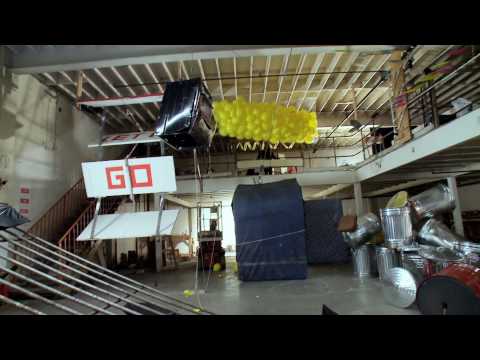
OK Go - This Too Shall Pass - Rube Goldberg Machine - Official Video
OK Go
5 HN recommender · 2010–2026
 5 mo on HN
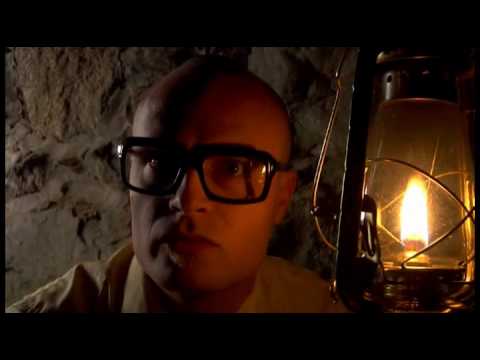
MC Frontalot - It Is Pitch Dark
MC Frontalot
5 HN recommender · 2012–2026
3 comments from Hacker News
If you like Baroque keyboard music, try something like Scarlatti. It's a bit difficult finding good interpretations (I have a CD somewhere), but here's an example link Rameau is a different kind of beast from Bach: link link I also really recommend giving Bach's cello suites a try: ▶ this video
This suffers from the limitation of many generative music algorithms/tools in that you're locked into a key (in this case C major - no black notes are played at all), which makes it a cool toy and research project, but of no real use to anyone. Most of what makes good music good (or interesting music interesting if you'd prefer) comes from harmonic interplay and shift. Bach was a master of this. If you listen to the unaccompanied 'cello suites[1] then what makes the music so fascinating is that even though only one note is being played at a time, the harmonic landscape is shifting and changing (often in 'unexpected' ways) all the time. Doing this with algorithms and making it sound good is hard , and nobody's (afaik) done it well yet. 1: ▶ this video
You can write any program in any Turing-complete language, so that's obviously not my point. Rather, it's that there's a deep interdependency between the three variables of language, programmer, and problem that give rise to a system like HN+YC (which was a single program until 2014). If you changed any one of those variables you'd either have gotten something radically different or nothing at all. So my statement is a bit like saying that YC would not exist without PG; and your objection is a bit like saying: that's an exaggeration, any person who did the same steps at the same time could have arrived at the same place (and perhaps better since that person might have been a better manager as well). (Not only PG built YC, of course! But PG wrote the software and that was a critical piece.) I'm not saying that all programs have this property about programming languages—rather, that some do, and they tend to be particularly interesting and creative. For another example, one might say that Unix would not exist without C. There would be more interesting and creative systems in the world if we were more open as a community to these unexplored spaces. We exclude them in order to have the feeling that we know what we're doing, and we reinforce this by ridiculing and dismissing deviants. The social dynamics that exclude new creative possibilities are incredibly strong, which is one reason why when systems like this do end up succeeding, they tend to be the work of loners, weirdos, or