The Most Common Cognitive Bias
Veritasium3 HN recommenders · recommended in 3 months, 2015–2023
explainer · general · evergreen · 2015–2023 on HN
A Veritasium video that runs the 2-4-8 rule-guessing puzzle on people to show how they test only examples that confirm their hypothesis. It uses this to illustrate confirmation bias and falsification.
Recommended as a clear demonstration of confirmation bias and the value of trying to break your own hypothesis.
Up next
 8 mo on HN
Brown; color is weird
Technology Connections
8 HN recommender · 2020–2026
 15 mo on HN
1. Introduction to Human Behavioral Biology
Stanford
15 HN recommender · 2012–2026
 13 mo on HN
Essential Ideas for Parents
Jason Salotti
9 HN recommender · 2015–2025
 13 mo on HN
The Century of the Self (Full Adam Curtis Documentary)
David Lessig
13 HN recommender · 2016–2026
 12 mo on HN
Randy Pausch's Last Lecture: Achieving Your Childhood Dreams
Carnegie Mellon University
12 HN recommender · 2008–2023
 11 mo on HN
Alain de Botton: Status Anxiety
Alain de Botton
4 HN recommender · 2015–2026
 10 mo on HN
Controlling Your Dopamine For Motivation, Focus & Satisfaction
Andrew Huberman
12 HN recommender · 2021–2024
 9 mo on HN
The Century of the Self - Part 1: "Happiness Machines"
JustAdamCurtis
13 HN recommender · 2017–2025
 10 mo on HN
RSA ANIMATE: Drive: The surprising truth about what motivates us
Royal Society of Arts
11 HN recommender · 2010–2022
 9 mo on HN
Why Being Delusional is a Superpower
Veritasium
9 HN recommender · 2020–2024
 9 mo on HN
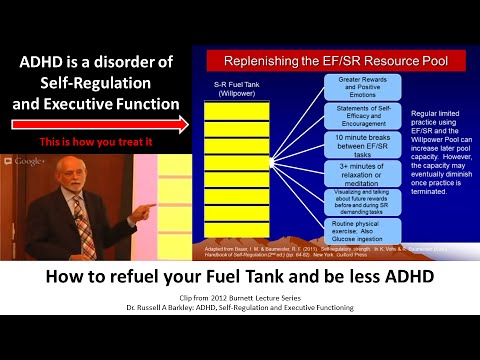
This is how you treat ADHD based off science, Dr Russell Barkley part of 2012 Burnett Lecture
Adhd Videos
10 HN recommender · 2015–2025
 6 mo on HN
Lecture: 2017 Maps of Meaning 01: Context and Background
Jordan B Peterson
6 HN recommender · 2017–2022
8 comments from Hacker News
Veritasium has a great video[1] about people’s cognitive bias towards using examples that prove their mental model, rather than using examples that disprove their mental model. But if you want to actually confirm you have accurate understanding of something, testing examples that don't fit your metal model is the workable methodology (i.e. use a null hypothesis). Testing examples that do match your mental model only proves your model partially matches the actual model, but it does very little to actually identify misunderstandings, or improve your understanding. [1] ▶ this video
Experimental science is all based around ruling out the null hypothesis. For that it needs to be falsifiable . The hypothesis 'the dog can differentiate between A and B' is very hard to falsify. Because the dog could differentiate, but choose to not act. You would need a fairly complete understanding of the dogs mental workings, and scanners to study them. On the other hand, 'the dog can't differentiate between A and B' is much easier to falsify. If you repeat an experiment a sufficient amount of times and the dog consistently has different behavior between A and B, you can rule this null hypothesis out. That is the real reason we always 'assume the worst'. Because 'assume the worst' is the easiest to scientifically rule out. EDIT: I would suggest this video by Veritasium, which also touches on this, at a very fundamental level: ▶ this video .
Veritasium, a pretty interesting youtube channel, posted a video on this experiment a while back. I found the discussion afterwards to be more thought-provoking than this article. ▶ this video
Related: ▶ this video TL;DW: I have a rule and you need to figure it out. The rule relates to a sequence of three numbers. You can propose a sequence and I’ll tell you yes/no if it meets the rule. I’ll give you the first sequence to get you started: sequence: 2,4,8 passes: Yes
Very interesting! This reminds me of a Veritasium video I watched years ago, called “The most common cognitive bias” [1]. People don’t explore solution spaces as effectively as they think they do. [1] ▶ this video
Derek Muller of Veritasium has done this test over a year ago on people in one of his videos: ▶ this video I've given the test to various people since then and never once came across someone who'd guess it right away, or within a short period of time. The breaking time came usually after a few minutes when they gave up and started throwing out random numbers that coincidentally did not meet the rule. Once you hit the first "No", it took a very short time to figure out the rule for almost everyone.
This is now the fourth time I've seen this exact rule. Another example: ▶ this video It's probably not "fair" to say I got it in zero... but I did. :) Now that the NYT has done it, this puzzle has probably attained enough popularity now that you really ought to change it up a bit now if you're going to run it yourself. Granted, the space of hypotheses as simple as "increasing/decreasing" is pretty small, but your ability to fool people with the first sample run is almost unbounded, so that helps.
They were thinking about how to make it work instead of how to make it break. Classic mistake (e.g. [1]). 1: ▶ this video