Inventing the Computer Mouse | Douglas Engelbart | Talks at Google
Talks at Google1 HN recommender · recommended in 1 month, 2014–2018
talk · general · evergreen · 2014–2018 on HN
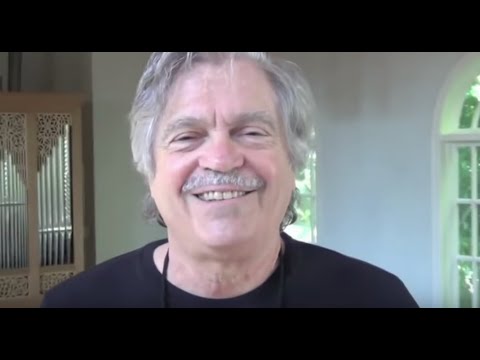
A Talks at Google visit by Douglas Engelbart, inventor of the mouse. He presents his lifelong aim of augmenting collective human intelligence, followed by a Q&A.
Recommended for hearing Engelbart's vision of collaborative hypertext systems straight from him, including his view of Wikipedia.
Up next
 3 mo on HN
Why 50 Million Chinese Homes are Empty
PolyMatter
3 HN recommender · 2018–2022
 3 mo on HN
Lina Khan – FTC Chair on Amazon Antitrust Lawsuit & AI Oversight | The Daily Show
The Daily Show
4 HN recommender · 2024–2024
 13 mo on HN
Jim Simons (full length interview) - Numberphile
Numberphile2
11 HN recommender · 2015–2024
 11 mo on HN
Steve Jobs Stanford Commencement Speech 2005
JoshuaG
13 HN recommender · 2007–2015
 11 mo on HN
Alan Kay - Normal Considered Harmful
powerfuloutlet
10 HN recommender · 2012–2026
 10 mo on HN
Growing a Language, by Guy Steele
Bill Pugh
11 HN recommender · 2014–2026
 10 mo on HN
A Philosophy of Software Design | John Ousterhout | Talks at Google
Talks at Google
11 HN recommender · 2018–2026
 10 mo on HN
"Uncle" Bob Martin - "The Future of Programming"
Paul Stringer's Mobile Tech
10 HN recommender · 2016–2022
 10 mo on HN
VCF East: Ken Thompson interviewed by Brian Kernighan
Vintage Computer Federation
11 HN recommender · 2019–2025
 10 mo on HN
Hamming, "You and Your Research" (June 6, 1995)
securitylectures
11 HN recommender · 2012–2023
 8 mo on HN
Tech Talk: Linus Torvalds on git
Google
9 HN recommender · 2007–2023
 10 mo on HN
Alan Kay's tribute to Ted Nelson at "Intertwingled" Festival
TheTedNelson
7 HN recommender · 2016–2025
4 comments from Hacker News
One video on the /islandweller channel is this: ▶ this video a 56-minute visit / presentation with Doug and several others at Google. Inspirational ideas (unfortunately displayed with slides instead of Hyperdoc demos) and perplexed reactions in the ending Q&A session. These ideas are so different; ordinary presentations are clearly incapable of selling them. (As Nelson, too, found out repeatedly.) Looks like job#1 is bootstrapping Hyperdoc presentation methods. Guess the 'Mother of all Demos' needs a 'Mother-Squared'. Another reaction: the video I saw had very low resolution, and the audio was recorded in a terribly noisy environment. I'm completely unable to process how this could -ever- have happened. TV did better in the Ted Mac era.
Thanks for the reply! It's a really interesting piece of research. Yes, you're quite right, the browser alone can't interact between all the programs, I was purely thinking of low hanging fruit for the browser plugin. I watched a Google interview with Douglas Engelbart [0] where people asked him a couple of times if Wikipedia was what he'd envisioned for hypertext, he was very polite about it and said it "was a good start", but he'd clearly wished that we'd got much further by now. What you're suggesting is definitely a step forward. [0]: ▶ this video
Sure but you can't re-allocate workers in a capitalist economy with a paper idea and a signature. You have to convince thousands of people. You have to convince investors to start new companies where new types of workers are doing something new on the web. You probably can't re-educate millions of the current designers, code monkeys, content farmers and clients to do new types of work that has nothing to do with their old work. There are plenty of these smartest and best people trying startups and they're not really measuring up to what computer pioneers imagined. Seems the best we can do for Engelbart's complex topic discussion systems are Wikipedia, Quora, Reddit and HN. HN's designer Paul Graham subscribes to Job's idea of simple, minimalist interfaces because they're easy to learn and get users fast. The old school of thought was programs and interfaces would do a lot, took a while to learn, but were worth it in the end. Today we assume only things that are worth learning on a computer are existing job skills. It's a Catch-22 and a hard sell. For reference link ▶ this video
This is along the lines of structured arguments link Doug Engelbart the creator of NLS and famous for Mother of All Demos talks about such systems ▶ this video and link etc. The general principle is we won't make much progress discussing complex issues by simply recreating the print world with increased convenience of a computer like we do now. The discussions have to take a fundamentally different form, possible only on computers, such as semantic argument maps, etc. Of course his perspective comes from 1950's when educated people had civil discussions that solved problems, or at least that's the modern nostalgia. He imagined a new class of "knowledge workers" moderating information. Instead we have voting rings and content farms. If anything, a structured argument map could shut down much of the attention seeking drivel surrounding every political/complex system issue.