Milton Friedman - Who Benefits From Licensing?
LibertyPen1 HN recommender · recommended in 1 month, 2015–2019
lecture · general · evergreen · 2015–2019 on HN
A short clip of Milton Friedman explaining who benefits from occupational licensing requirements, arguing they mainly protect practitioners from competition.
HN cites it in discussions of occupational licensing and rent-seeking as a libertarian argument.
Up next
 4 mo on HN
World's Roundest Object!
Veritasium
6 HN recommender · 2013–2018
 17 mo on HN
How The Economic Machine Works by Ray Dalio
Principles by Ray Dalio
18 HN recommender · 2014–2026
 4 mo on HN
RSA ANIMATE: Crises of Capitalism
Royal Society of Arts
4 HN recommender · 2011–2016
 4 mo on HN
The A.I. Dilemma - March 9, 2023
Center for Humane Technology
11 HN recommender · 2023–2024
 3 mo on HN
Sinclair's Soldiers in Trump's War on Media
Deadspin
3 HN recommender · 2020–2025
 1 mo on HN
Richard Feynman: Can Machines Think?
Lex Clips
1 HN recommend · 2022–2025
 10 mo on HN
Fear the Boom and Bust: Keynes vs. Hayek - The Original Economics Rap Battle!
Radical Discourse
10 HN recommender · 2010–2024
 8 mo on HN
Debt: The First 5,000 Years | David Graeber | Talks at Google
Talks at Google
8 HN recommender · 2013–2024
 7 mo on HN
The Machinery Of Freedom: Illustrated summary
bitbutter
4 HN recommender · 2012–2020
 6 mo on HN
The Psychology of Human Misjudgement - Charlie Munger Full Speech
BuffettMungerWisdom
6 HN recommender · 2014–2023
 6 mo on HN
The Economics of Airline Class
Wendover Productions
6 HN recommender · 2017–2025
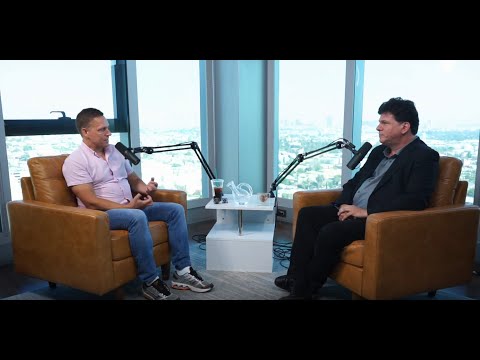 7 mo on HN
Peter Thiel on "The Portal", Episode #001: "An Era of Stagnation & Universal Institutional Failure."
Eric Weinstein
8 HN recommender · 2019–2024
3 comments from Hacker News
I think Milton Friedman had some great (albeit biased) lectures in which he analyzed these issues from a consequentialist libertarian point of view: ▶ this video
Careful, "for-profit" healthcare has a lot of government controls on it. Single payer is only obvious after you add a lot of controls to the market. See ▶ this video and the more complete link . He explains how regulation eventually results in a centrally planned setup that is less efficient than what used to happen.
The issues discussed in the post are about pretty malicious acts, basically writing spyware and malware. I'm not sure how a Professional Engineer exam will really address this. We are mixing in a lot of unrelated things (tests, apprenticeship, etc) to guise what this actually is: a club where existing members are the gate keepers for new members. This is the circular part, it serves the purposes of the members, not the customers -- notice how the users and customers don't figure into any of the 4 steps you mentioned in licensure at all -- they aren't empowered, they are now "protected" by the very same set of people we determined needing wrangling in in the first place. Aside from the trivial chicken and egg problems (who decides the initial PEs? who decides the first exam?), we have the very real concern that the most connected current software engineers in government are precisely the ones that are probably currently breaking the code of ethics (writing malware for national security purposes). This highlights the issue with "self judgment" and makes me incredibly skeptical of the opinions of such a potential licensing committee. Software engineering is not mechanical engineering. There's very little known "for sure", and it doesn't compare to the kind of experience we have building a bridge (there are people who can make really good arguments that mutability is "unsafe" for customers, or that strcpy vs strncpy, or hell, C being used at all). This makes this area ripe for ab