Nest Protect is a terrible buggy product
Brad Fitzpatrick2 HN recommenders · recommended in 2 months, 2015–2025
comedy · general · 2015–2025 on HN
Brad Fitzpatrick records himself struggling to silence a set of first-generation Nest Protect smoke alarms that keep beeping and triggering one another.
HN cites it as the famous example of how over-clever smart-home devices can fail at something as basic as a smoke alarm.
Up next
 3 mo on HN
Pandora's Box, E1: The Engineers' Plot
nagualdesign
3 HN recommender · 2014–2025
 6 mo on HN
The Patent Scam Intro
Austin Meyer
6 HN recommender · 2016–2022
 3 mo on HN
Slavoj Žižek on "They Live" (The Pervert's Guide to Ideology)
Christian G
3 HN recommender · 2020–2026
 4 mo on HN
Slavoj Žižek + Paul Holdengräber "Surveillance and whistleblowers" - International Authors' Stage
Det Kgl. Bibliotek
3 HN recommender · 2014–2016
 3 mo on HN
Erlang Factory SF 2016 Keynote Phoenix and Elm – Making the Web Functional
Erlang Solutions
2 HN recommender · 2016–2022
 10 mo on HN
Erlang Factory 2014 - That's 'Billion' with a 'B': Scaling to the Next Level at WhatsApp
Erlang Solutions
6 HN recommender · 2014–2022
 3 mo on HN
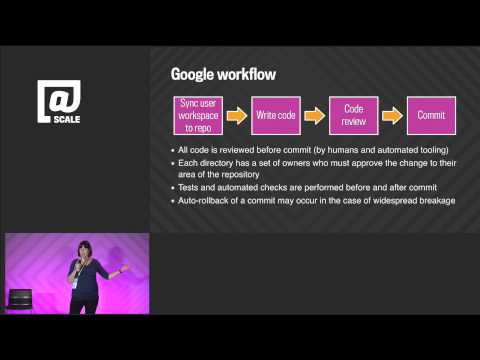
Why Google Stores Billions of Lines of Code in a Single Repository
@Scale
2 HN recommender · 2016–2022
 7 mo on HN
Google Self-Driving Car Project | SXSW Interactive 2016
SXSW
2 HN recommender · 2016–2018
 12 mo on HN
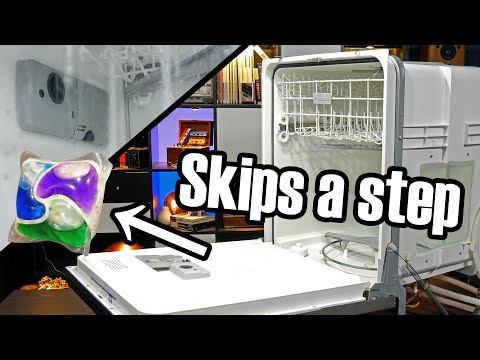
Detergent packs are kinda wishy-washy (Dishwashers Explained)
Technology Connections
15 HN recommender · 2021–2025
 11 mo on HN
Behind the Scenes of iOS Security
Black Hat
9 HN recommender · 2016–2026
 11 mo on HN
The Antique Toaster that's Better than Yours
Technology Connections
12 HN recommender · 2019–2025
 8 mo on HN
Guarding Against Physical Attacks: The Xbox One Story — Tony Chen, Microsoft
Platform Security Summit
8 HN recommender · 2019–2026
12 comments from Hacker News
(googler, opinions are my own) I honestly like bradfitz's youtube video the best to show the Nest Protect (the smoke alarm) issues[0]. They have since fixed these issues, as this was the gen one protect. For your #2 (no insider knowledge), that looks like people's accounts getting hacked and then the hackers talking through them. All home camera cloud based cameras have had these cases. I think Nest moving to Google account login system for Nest is probably the best protection against this kind of thing happening. Account takeovers happen, and guarding against them at scale is hard (especially when people reuse passwords). For #1, I think the culture has changed a lot as it's been absorbed into Google's hardware division. Hopefully it's better, but I couldn't say anything of value there. [0] ▶ this video (warning, loud video)
In line with this is the classic "It Can't Be Hushed Here" Nest bug video, by Brad Fitzpatrick from last year: ▶ this video [Warning: contains extremely annoying Nest smoke detectors beeping. So prepare to lower your volume] Brad looks very annoyed and it was no fun for him, but on an artistic level it is really well done, it is an epic battle between human and machine.
Only took ten years: ▶ this video At the time, Fitzpatrick worked for Google and got in a small amount of trouble for posting this video. The nest creator (Fadell) and the head of INfrastructure (Hoelze) both criticized him prominently internally. A number of googlers were suspicous and we started talking to the product managers for Nest Protect and it turned out they knew about this problem, the product was just defective. At that point, Nest more or less went on life support and Tony eventually bailed ( link ) I remember walking into an office and seeing a group of Nesters sitting under a clock that counted down until they were allowed to transfer out of Nest. My gosh, google is just terrible with physical products.
Being critical is fine. Brad Fitzpatrick wasn't fired for ▶ this video and Google still hosts that piece of (legitimate!) criticism.
"this is more like running into a meeting and then interrupting it so you can start reciting NLRB policy than it is posting a flyer" How is this like "running into a meeting"?? Do Googlers visit the IRI website every day? Is this pop-up really a distraction to core work for engineering? Your party line here makes the change sound like Nest shutting down the house [1] but according to the evidence it looks more like that recruiting thing that gives you a pop-up for google.com/foobar when you enter certain search queries. [1] ▶ this video
Aren't Nest Protect alarms also linked? This harrowing video leads me to believe they are. It's a couple years old at this point though. (Turn your sound down, video is a poor soul trying to deactivate them.) ▶ this video
The reference to Nest isn't a big plus in my book. I've only heard bad things about it - ▶ this video This phone isn't going to kill the iPhone - in fact it would take a big screwup on the part of Apple for people to start migrating away from its products. Not that Apple is incapable of screwing up, but so far they've sailed their ship pretty well. Apart from the hardware, there's the whole ecosystem of app developers, programming environments, cloud services.. Ultimately it's about who can attract the more talented developers - and that is a lot more difficult than snapping a faster CPU or better camera in your phone.
I don't know, after seeing the video [1] from Brad Fitzpatrick about his experience with Nest products, I'm not sure I'd ever consider them. Side note: if you watched the season premiere of Mr. Robot last night, there was a scene that reminded me of Brad's video (I'll say no more for fear of spoilers) [1] ▶ this video
> I'm curious how many people think this is valuable as a stand-alone device? Does it need to have it's own screen and interface? I see a device whose dominant use case would be direct, at-a-glance interaction. It doesn't strike me as sensible that a typical user would generally care about data whose practicality matters only when he/she is physically present in the datalogged space...almost as insensible as texting someone sitting right beside you. Furthermore, omission of direct UI immediately eliminates the unconnected market segment. I would imagine that "mobile app" isn't exactly a driving parameter when people are looking for an air quality monitor, but in today's connected age, it does seem to add modern appeal and a sense of (perhaps misguided?) relevance. > Would it make more sense built into something like a thermostat? This isn't a thermostat, which makes the proposition sound like feature creep. -Placement consideration: Think where thermostats are typically mounted in a home: places that are clear from passing obstruction but not where people generally spend much time in. Places I'd expect to find this device: kitchen counter, living room table, bedside night stand, computer desktop, garage workbench...in other words, where people linger, within arm's reach, and generally not anywhere near a thermostat. -Safety consideration: Designing a 4-20mA temperature control circuit is a straight forward affair. Designing a fault-tolerant, high-reliability, regulation-compl
This is neither the first time Google's done something like this to customers, nor the first time Tony Fadell has been directly involved. When they pulled Google Glass from the market, it was concurrent with moving the Glass team to Fadell's leadership. They didn't go quite so far as to push an update to brick devices, but they left the software in a broken state, and refused to open source their fork of Android so users could fix it themselves. Nest has also burned a lot of Google's goodwill with badly designed smoke detectors ( ▶ this video ) and thermostats ( link ). And then there's this, on a recent HN thread: link > "I still wake up with something like PTSD occasionally from getting yelled at and bullied by Tony Fadell almost literally every day while I was there." > "Tony literally stood up at an all-hands after the Alphabet thing and said "Fuck being Googley" (direct quote)." I think Google/Alphabet need to take a serious look at what Nest has been doing to their brand. A few thousand very-pissed-off people here and a few thousand very-pissed-off people there add up to a serious liability for a company like Google.
The Nest thermostat is a dream compared to the smoke detector. The smoke detector goes off all the time -- without rhyme or reason. With a normal detector, you can just pull the battery if it refuses to shut off. With Nest, you actually need a screw driver to open the battery compartment to turn it off. So, when it decides to wake up the entire house at 3am (yes, the entire house, since they all go off in unison) you'll need to go find a screw driver to get it to shut up. The one flippin' reason I bought a Nest Protect was so I could "wave to silence" an alarm. Well, every time it goes off, it tells me that "this alarm cannot be silenced" - even by pushing the power button. Not once have I been able to turn off an alarm without removing the batteries. The worst feeling is when you get an alert on your iPhone while nobody (but your pet) is home. "Alert: your house is on fire." Then you rush home and realize it's a false alarm. After our fourth or fifth false alarm we returned them all and replaced them with the old-fashioned alarms. Watch this hilarious video if you're considering buying a Nest Protect: ▶ this video (warning: loud alarms in video)
You definitely don't have to write your own an OS. You use existing tools, for example FreeRTOS. It's surprisingly simple. With a microcontroller, you can have a pretty much complete understanding of the whole machine. All you need is a basic knowledge of C, and most of the people who would solder stuff to a Raspberry Pi already have that or are willing to learn. Say you're making a thermostat. By convention, you leave address 0x0 empty, since dereferencing the NULL pointer is bad form :) At address 0x4 you have a int containing the target temperature. At address 0x8 you have a int containing the current measured temperature. Your whole app uses 8 bytes of memory, plus a few more for the stack. You write a loop. It reads a few GPIOs, updates those two values, does a bit of logic to decide whether to turn on the heat, then writes one more GPIO to turn the heater on or off. GPIOs are "general purpose IO", metal pins that can be individually set to, say, +5V or 0V. The beauty of this is that if you write it cleanly and debug it and test it once, it will work perfectly forever. It will never throw up a popup that says "a new version of Ubuntu is available". It will never ask you to download 80MB of Java. It will never auto update. The server will never go down, because there is no server. It feels totally different from typical software development. You're writing a bit of C, but you're not making an "app" with all the complexity and flakiness that entails. You're creating an emb