Social Physics: How Good Ideas Spread | Sandy Pentland | Talks at Google
Talks at GoogleRecommended by 3 HN commenters across 3 months, 2015–2022
talk · general · evergreen · 2015–2022 on HN
Sandy Pentland of MIT presents his book on social physics, which uses big-data studies of how people interact to explain how ideas spread. He describes findings on collective intelligence and social influence.
HN commenters recommend it for the finding that idea exchange and connectivity drive productivity and wealth, which they apply to cities, offices and online communities.
Up next
 3 mo on HN
Do we see reality as it is? | Donald Hoffman | TED
TED
Recommended 3× on HN · 2016–2024
 3 mo on HN
Giant Robot Project, Part 1
Jaimie Stuff
Recommended 3× on HN · 2011–2020
 15 mo on HN
1. Introduction to Human Behavioral Biology
Stanford
Recommended 15× on HN · 2012–2026
 13 mo on HN
Essential Ideas for Parents
Jason Salotti
Recommended 9× on HN · 2015–2025
 13 mo on HN
The Century of the Self (Full Adam Curtis Documentary)
David Lessig
Recommended 13× on HN · 2016–2026
 12 mo on HN
Randy Pausch's Last Lecture: Achieving Your Childhood Dreams
Carnegie Mellon University
Recommended 12× on HN · 2008–2023
 11 mo on HN
Alain de Botton: Status Anxiety
Alain de Botton
Recommended 4× on HN · 2015–2026
 10 mo on HN
Controlling Your Dopamine For Motivation, Focus & Satisfaction
Andrew Huberman
Recommended 12× on HN · 2021–2024
 9 mo on HN
The Century of the Self - Part 1: "Happiness Machines"
JustAdamCurtis
Recommended 13× on HN · 2017–2025
 10 mo on HN
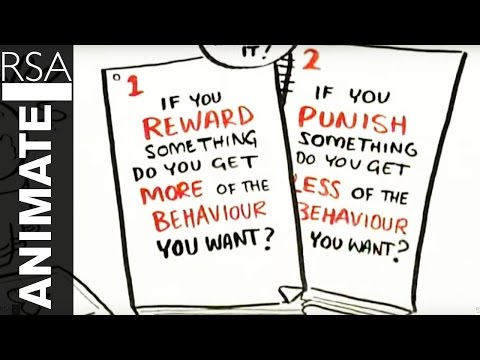
RSA ANIMATE: Drive: The surprising truth about what motivates us
Royal Society of Arts
Recommended 11× on HN · 2010–2022
 9 mo on HN
Why Being Delusional is a Superpower
Veritasium
Recommended 9× on HN · 2020–2024
 9 mo on HN
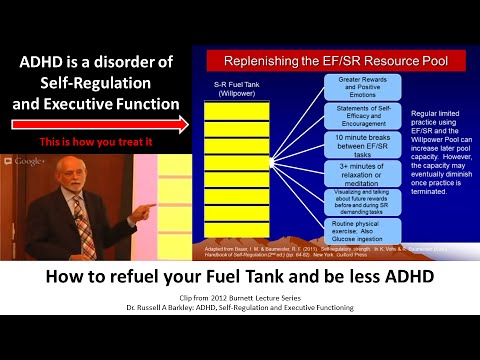
This is how you treat ADHD based off science, Dr Russell Barkley part of 2012 Burnett Lecture
Adhd Videos
Recommended 10× on HN · 2015–2025
6 comments from Hacker News
Yay! Social physics :) There's a great Authors at Google talk by Sandy Pentland, about his book of the same name. Gives a good overview of the book, but 100% still worth a read after watching, esp if you are someone who works with (or would like to work with) large groups of people -- event organizing, companies, community, group facilitation, etc. ▶ this video
The most profound thing I know about cities + public policy: Google hosted a talk in 2014 by MIT Professor Sandy Pentland called "Social Physics: How Good Ideas Spread". His research concludes that our connectivity - free and fast flow of data on networks, people on roads, goods and services, etc. - is our greatest economic and social virtue. His models show - "like a law" - that the more connected we are, the wealthier we are as a society. Check it out: ▶ this video And good luck to everyone behind this.
Sandy Pentland: "Social Physics: How Good Ideas Spread" | Talks at Google similar theme. ▶ this video I think its in this video that he talks about the productivity gains of the seemingly random exchanges of ideas, and the possibility to increase them by scheduling and thoughtfully designed common areas.
You bring up two very interesting and powerful phenomena: "siren servers" and "social physics". The first term is used by Jaron Lanier to describe computer systems that, like "sirens" of the sea, lure everyone into their beautiful environs, collect all of the data on them, and statistically model all of this data in ways that effectively master the nature of this individual - her beliefs, her abilities, her emotions - until ultimately that individual is made both completely vulnerable and completely powerless. Lanier's book is intentionally provocative and controversial, while rather intelligent and compassionate in its spirit, and I recommend checking it out: link . The second term comes from a talk at Google in 2014 called "Social Physics: How Good Ideas Spread" ( ▶ this video ) by MIT Professor Sandy Pentland. He describes research supporting the recent Nature publication you link to on social and cultural progress, which concludes that our connectivity - free and fast flow of data on networks, people on roads, goods and services across nations, etc. - is our greatest economic and social virtue. His statistical modeling results really strongly show - "like a law" - that the more connected we are, the wealthier we are as a society. It's really interesting to consider how we could concentrate on using all of the data and models to make deep positive impacts on our society, while respecting our human dignity. To quote Pope Francis's address to the U.N. today: "Integral human dev
Nice! In case anyone is interested in the science of this effect and it's surprising power, this is an almost exact reproduction of an experiment, in the field of "connection science" or "social physics". (NOTE: The true value here is in the CROSS-INCENTIVIZATION with an existing social relationship, not just the money) The general truism that falls out of it is: When possible, always apply incentives to the social fabric, not individuals. i.e. incentivize the edges of the graph (the relationships), rather than the nodes (the people) in isolation. Seek results by always opting to strengthen social bonds, instead of trying to bend people (who are social creatures) into actions while neglecting their social context, which often pull them back into prior habits or prevent the new ones from sticking strongly. Under some experimental conditions, incentives are 30x more effective when you use the money to strengthen a social relationship around an activity, rather than incentivizing the activity itself. (Further, unlike a direct monetary incentive where removing the incentive strongly attenuates the effect, you could now remove the money incentive between you and your brother, and you're much more likely to keep performing the activity even without monetary incentive, because the persistent social incentive is bootstrapped.) This and other really interesting related research was pioneered by MIT's Sandy Pentland. It's very solid and applies in practice: His lab won the DARPA networ
The field of social physics has lots to say about this: ▶ this video link > What pattern of exploration and social learning produced the best outcome? We discovered the answer when we plotted the return on investment each trader got against the diversity of ideas he or she harvested through social learning. Social physics supports a framing that groups are like "machines for finding the best ideas", and having group members with access to diverse sources of ideas (polygons from different spaces and experiences count as this) is part of a properly calibrated social network where the best ideas are within reach, to address any given challenge that may surface.