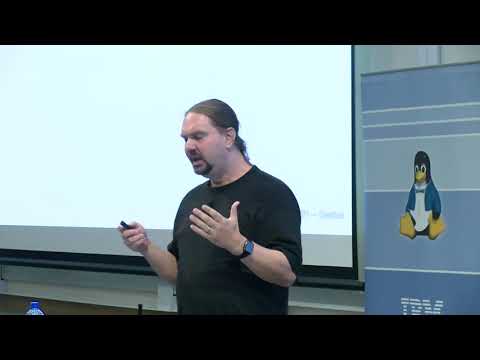
Theo de Raadt (ruBSD 2013)
fuckyoustupidzombie1 HN recommender · recommended in 1 month, 2014–2020
interview · intermediate · 2014–2020 on HN
A roughly 14-minute interview with OpenBSD founder Theo de Raadt at ruBSD 2013. He talks about making painful changes, getting real feedback, mitigation techniques compared to other OSs, and virtualization.
Pointed to in OpenBSD and virtualization threads for Theo's candid views on security mitigations and supporting modern x86 VMs.
Up next
 3 mo on HN
A London Accent from the 14th to the 21st Centuries
Simon Roper
3 HN recommender · 2021–2024
 4 mo on HN
Why are British place names so hard to pronounce?
Map Men
4 HN recommender · 2021–2024
 14 mo on HN
The Tragedy of systemd
linux.conf.au
16 HN recommender · 2019–2025
 10 mo on HN
The Real Story Behind Wayland and X - Daniel Stone (linux.conf.au 2013)
Mladen Mijatov
13 HN recommender · 2013–2026
 9 mo on HN
LISA11 - Fork Yeah! The Rise and Development of illumos
USENIX
9 HN recommender · 2012–2026
 8 mo on HN
Tech Talk: Linus Torvalds on git
Google
9 HN recommender · 2007–2023
 7 mo on HN
DebConf 14: QA with Linus Torvalds
Adnan Hodzic
7 HN recommender · 2014–2021
 6 mo on HN
Gtk to Qt - a strange journey [linux.conf.au 2014]
Konstantin Bläsi
5 HN recommender · 2014–2024
 6 mo on HN
User-level threads....... with threads. - Paul Turner - Google
Linux Plumbers Conference
6 HN recommender · 2013–2024
 5 mo on HN
Using a 1930 Teletype as a Linux Terminal
CuriousMarc
4 HN recommender · 2020–2025
 5 mo on HN
How I Designed a Free Music Font for 5 Million Musicians (MuseScore 3.6)
Tantacrul
5 HN recommender · 2021–2024
 5 mo on HN
NSA operation ORCHESTRA: Annual Status Report
HUP
9 HN recommender · 2014–2019
7 comments from Hacker News
I found this ~14 minute interview with Theo de Raadt from ruBSD very interesting and apropos OpenBSD's approach to trail-blazing "painful" changes: ▶ this video tl;dw: Changes that must be done, must be DONE. The only way to see the ACTUAL impact is to just do it already and get feedback from real users. When the dust has settled, less brave projects can follow suit. I'm donating.
Linux security has been criticised[1] for not having security enabled by default, and for allowing users to disable the security measures. This leads to users avoiding setting minimal-rights policies, and leaving the doors open. When security is optional, policy issues in distributions also aren't fixed quickly. To limit applications rights to a minimum, SELinux, firewalls, and (systemd) sandboxes are all tools that could be used, but aren't in most installs. However, I think we are still lacking user-friendly interfaces (opensnitch is ported from MacOS). One idea could be to let the desktop environment restrict one more capability a application on every run, inform the user before running it and ask the user after if the software worked correctly. That would gradually lead to a minimum set of software rights. [1] ▶ this video
your link is from 2007-10-24. more recently: from ruBSD in 2013 ▶ this video (6:36 mark) People do change their minds as they learn new things or the world changes.
▶ this video Edit: First 5 Minutes De Raadt speaks about Mitigation Techniques in comparison to other OSs, including FBSD. I fear, this is still true in mid-2015..
"The biggest problem with OpenBSD has been lack of support for hardware and virtualization, though a lot of the reason for this has been the OpenBSD team's own hostility towards virtualization. I get their reasoning (virtualization is a security issue), but the economic consequences have been devastating to their user base." If you watch the the ruBSD 2013 interview video with Theo de Raadt[1] at the 6:36, he states that they should take a shot at dealing with modern x86 VMs. That gives me quite a bit of hope along with the work on vmware related drivers in each release. I use VMware at work, seems to do ok. 1) ▶ this video
If you watch the the ruBSD 2013 interview video with Theo de Raadt[1] at the 6:36, he states that they should take a shot at dealing with modern x86 VMs. That gives me quite a bit of hope along with the work on vmware related drivers in each release. I use VMware at work, seems to do ok. 1) ▶ this video
If you watch the the ruBSD 2013 interview video with Theo de Raadt[1] at the 6:36, he states that they should take a shot at dealing with modern x86 VMs. That gives me quite a bit of hope along with the work on vmware related drivers in each release. 1) ▶ this video