50 Years Ago, This Was a Wasteland. He Changed Everything | Short Film Showcase
National Geographic3 HN recommenders · recommended in 3 months, 2018–2022
documentary · general · evergreen · 2018–2022 on HN
An 8-minute National Geographic short film about David Bamberger, who bought 5,500 overgrazed acres in the Texas Hill Country and restored the land and its aquifers over about 50 years.
Cited in climate and water threads as an encouraging example of large-scale landscape restoration.
Up next
 1 mo on HN
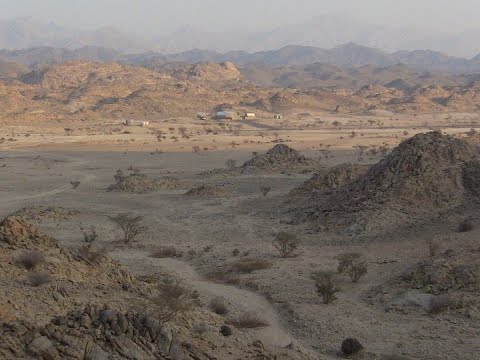
The Story of Al Baydha: A Regenerative Agriculture in the Saudi Desert. قصة مشروع البيضاء
Al Baydha
1 HN recommend · 2022–2023
 3 mo on HN
PHP doesn't suck (anymore)
Aaron Francis
3 HN recommender · 2023–2024
 4 mo on HN
Nebraska retiree uses earths's heat to grow oranges in snow
Kirsten Dirksen
4 HN recommender · 2019–2026
 10 mo on HN
The Coming Collapse of the Middle Class with Elizabeth Warren
University of California Television (UCTV)
10 HN recommender · 2008–2022
 12 mo on HN
Dominion (2018) - full documentary [Official]
Farm Transparency Project
10 HN recommender · 2019–2024
 11 mo on HN
Treating the Farm as an Ecosystem with Gabe Brown Part 1, The 5 Tenets of Soil Health
Living Web Farms
12 HN recommender · 2019–2025
 10 mo on HN
The Most IMPORTANT Video You'll Ever See (part 1 of 8)
wonderingmind42
13 HN recommender · 2010–2025
 9 mo on HN
How to green the world's deserts and reverse climate change | Allan Savory
TED
9 HN recommender · 2013–2023
 8 mo on HN
Life in Syntropy
Agenda Gotsch
4 HN recommender · 2017–2023
 8 mo on HN
Eating less Meat won't save the Planet. Here's Why
Joseph Everett - WIL
10 HN recommender · 2021–2026
 7 mo on HN
Why Grocery Shopping is Better in Amsterdam
Not Just Bikes
7 HN recommender · 2020–2025
 6 mo on HN
Gabe Brown: Keys To Building a Healthy Soil
Transcend Productions
5 HN recommender · 2015–2023
4 comments from Hacker News
If this interests you, I've been watching a lot of permaculture and regenerative agriculture videos on YouTube and there is some really encouraging stuff going on out there! I have no idea how to make the restorative stuff go more mainstream, but it's really impressive to watch small communities or determined individuals entirely change a landscape in a few decades. A few I've enjoyed: - link - ▶ this video - link - link - link
One of my favorite "case studies" related to this is the Selah ranch in Texas. The TL;DR: version is that because it was choked with trees and brush, the groundwater had been removed. The owners restored it to primarily native grassland, and in the process restored natural water holes, and streams. National Geographic did a really good 8-minute video on it: ▶ this video More info on the ranch: link Trees are great in some environments, but not appropriate for all environments.
This National Geographic piece about David Bamberger and the Selah Ranch Project in Texas bears watching. ▶ this video Surface water from rivers, lakes, streams, and reservoirs garner attention because they are visible and make the effects of changes and shortages easier to understand. But a much more difficult crisis may already be upon us in the form of aquifer depletion and may require a complete paradigm shift in how we approach conservation and usage.
This is extremely obvious and it's surprising how long it took for this to be noticed. If you clear a section of a forest, the area becomes as hot as a desert because of the lack of shade. This is a "microclimate". The more area you clear, the larger this hot microclimate becomes. This is the reason why there is desertification all over the globe. Whether you believe it or not, it is just as easy to create a desert from a forest as it is to do the reverse [1], it can even be a passive process [2]. Deserts rain occasionally, and when they do, it becomes a flash flood. If you tame the flash flood [3][5], you can change deserts. There are projects that do this and have proven its effectiveness, while also being able to solve the water crisis in arid lands in Africa [6]. Trees are incredibly important not necessarily for their reduction of carbon dioxide, but because of the microclimate each tree creates. They filter harsh light for the undergrowth, they cool the general area, and they transpire around 99% of the water they get, leading to more clouds and then more precipitation in other areas [4]. The reason why projects like this aren't so popular and aren't subsidized is not because they aren't effective, but because it is hard to make money from actually saving the environment. [1] link [2] ▶ this video [3] link [4] link [5] link [6] link