Travis Oliphant: NumPy, SciPy, Anaconda, Python & Scientific Programming | Lex Fridman Podcast #224
Lex Fridman2 HN recommenders · recommended in 3 months, 2021–2024
podcast · intermediate · evergreen · 2021–2024 on HN
Lex Fridman interviews Travis Oliphant, creator of NumPy, SciPy and Anaconda, about scientific Python and its history. It runs about three hours.
Recommended as a firsthand history of how Python became the language of scientific computing and ML.
Up next
 11 mo on HN
Principles for Dealing with the Changing World Order by Ray Dalio
Principles by Ray Dalio
10 HN recommender · 2022–2025
 3 mo on HN
John Carmack Tech Talk with UMKC-SCE
UMKC School of Science and Engineering
3 HN recommender · 2017–2023
 4 mo on HN
"Data Driven UIs, Incrementally" by Yaron Minsky
Strange Loop Conference
4 HN recommender · 2018–2022
 11 mo on HN
Maybe Not - Rich Hickey
ClojureTV
14 HN recommender · 2018–2025
 6 mo on HN
The Clean Architecture in Python
Next Day Video
5 HN recommender · 2017–2021
 3 mo on HN
GopherCon 2016: The Design of the Go Assembler - Rob Pike
Gopher Academy
3 HN recommender · 2017–2025
 2 mo on HN
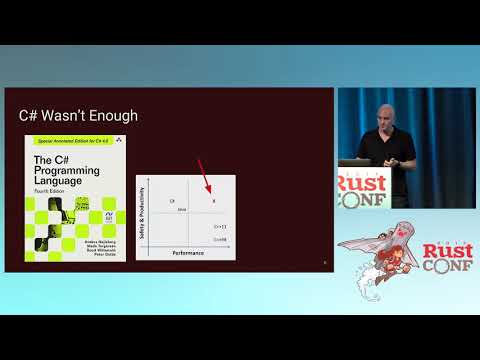
RustConf 2017 - Closing Keynote: Safe Systems Software and the Future of Computing by Joe Duffy
Confreaks
2 HN recommender · 2017–2025
 4 mo on HN
Dtrace Review
GoogleTalksArchive
4 HN recommender · 2013–2026
 18 mo on HN
Ruby Conf 12 - Y Not- Adventures in Functional Programming by Jim Weirich
Confreaks
17 HN recommender · 2013–2026
 16 mo on HN
The spelled-out intro to neural networks and backpropagation: building micrograd
Andrej Karpathy
17 HN recommender · 2022–2025
 16 mo on HN
How Python was Shaped by leaky Internals, Armin Ronacher, Flask framework
Видео с мероприятий {speach!
15 HN recommender · 2017–2025
 15 mo on HN
RailsConf 2014 - All the Little Things by Sandi Metz
Confreaks
15 HN recommender · 2015–2025
4 comments from Hacker News
Yup, I agree that Python composes like Unix does, which is a reason for its phenomenal growth: Narrow Waists Can Be Interior or Exterior: PyObject vs. Unix Files - link The appendix links to: Why is Python the language of machine learning? link In particular, I highly recommend this bit of history from NumPy creator Travis Oliphant: ▶ this video
This episode of the lex fridman podcast gives a good overview of how python's scientific computing community developed. ▶ this video
Because Python has NumPy, which implements vectorized math on arrays and matrices. Machine learning algorithms are implemented naturally and efficiently with those primitives. PyTorch, TensorFlow, and I think every other machine learning framework in Python all use NumPy. JavaScript, Ruby, and Perl either don't have this abstraction at all, or they have much weaker versions of it, and many fewer scientific libraries. NumPy started in the early 2000's and continues to this day. It takes decades to build up this infrastructure! This recent interview with NumPy creator Travis Oliphant is great: ▶ this video He talks about how there were competing abstractions like "Numeric" and another library, and his goal with NumPy was to unify them. And how there are still some open design issues / regrets. There were multiple people in the nascent Python community who were tired of MATLAB, not just because it's proprietary, but because it's a weak and inefficient language for anything other than its scientific use cases. You won't have a good time trying to write a web app wrapper in MATLAB, for example. The much more recent Julia language is also inspired positively and negatively by MATLAB, and is very suitable for machine learning, though it doesn't have the decades of libraries that Python has. ----- The NumPy extension was in turn enabled by operator overloading in Python (which is actually a very C++ influenced mechanism). JavaScript doesn't have operator overloading; I'm pretty sure Perl
If in doubt, you can always check out the Lex Fridman podcast with Numpy creator Travis Oliphant: ▶ this video They pronounce the "Py" as "pie".