HC2023-K2: Hardware for Deep Learning
hotchipsvideos2 HN recommenders · recommended in 2 months, 2023–2025
talk · advanced · 2023–2025 on HN
Bill Dally of NVIDIA gives a Hot Chips 2023 keynote on the challenges of building hardware for deep learning. He traces how GPUs have been adapted for machine learning, especially training.
HN points to it for an insider view of why NVIDIA's AI gains came from design rather than process, and for data-movement power costs.
Up next
 3 mo on HN
Saving Voyager 1! - Bruce Waggoner at !!Con 2024
!!Con
4 HN recommender · 2024–2026
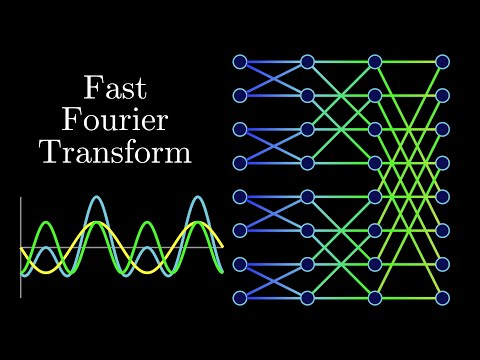 8 mo on HN
The Fast Fourier Transform (FFT): Most Ingenious Algorithm Ever?
Reducible
7 HN recommender · 2021–2026
 12 mo on HN
8-bit computer update
Ben Eater
14 HN recommender · 2017–2023
 11 mo on HN
Light Years Ahead | The 1969 Apollo Guidance Computer
TNMoC
11 HN recommender · 2021–2026
 11 mo on HN
“Hello, world” from scratch on a 6502 — Part 1
Ben Eater
11 HN recommender · 2019–2026
 10 mo on HN
Finding the Missing Memristor - R. Stanley Williams
The Qualcomm Institute
12 HN recommender · 2010–2024
 10 mo on HN
The Ultimate Game Boy Talk (33c3)
media.ccc.de
10 HN recommender · 2017–2026
 11 mo on HN
The Thirty Million Line Problem
Molly Rocket
11 HN recommender · 2018–2024
 9 mo on HN
USENIX ATC '21/OSDI '21 Joint Keynote Address-It's Time for Operating Systems to Rediscover Hardware
USENIX
12 HN recommender · 2021–2026
 8 mo on HN
Jim Keller: Moore's Law, Microprocessors, and First Principles | Lex Fridman Podcast #70
Lex Fridman
8 HN recommender · 2020–2023
 7 mo on HN
34C3 - The Ultimate Apollo Guidance Computer Talk
media.ccc.de
9 HN recommender · 2018–2025
 8 mo on HN
Jim Keller: Moore’s Law is Not Dead
UC Berkeley EECS
7 HN recommender · 2019–2025
3 comments from Hacker News
Neuromorphic computation has been hyped up for ~ 20 year by now. So far it has dramatically underperformed, at least vis-a-vis the hype. The article does not distinguish between training and inference. Google Edge TPUs link each one is capable of performing 4 trillion operations per second (4 TOPS), using 2 watts of power—that's 2 TOPS per watt. So inference is already cheaper than the 20 watts the paper attributes to the brain. To be sure, LLM training is expensive, but so is raising a child for 20 years. Unlike the child, LLMs can share weights, and amortise the energy cost of training. Another core problem with neuromorphic computation is that we currently have no meaningful idea how the brain produces intelligence, so it seems to be a bit premature to claim we can copy this mechanism. Here is what the Nvidia Chief Scientist B. Dally (and one of the main developers of modern GPU architectures) says about the subject: "I keep getting those calls from those people who claim they are doing neuromorphic computing and they claim there is something magical about it because it's the way that the brain works ... but it's truly more like building an airplane by putting feathers on it and flapping with the wings!" From "Hardware for Deep Learning" HotChips 2023 keynote. ▶ this video This is at 21:28. The whole talk is brilliant and worth watching.
I think your biggest mistake is ignoring the amount of software that runs on top of the hardware. There were times in the past where others had a higher number of FLOPS, but it didn’t make a dent in the usage of CUDA. My standard assumption about anything in tech (and beyond) is that you don’t win on first principles alone (“parallel design is well understood”). It’s the details that make you stand out. Bill Daly gave a great presentation at Hot Chips a few weeks ago that explains how Nvidia’s AI performance was only in small parts due to process improvement. The rest was doing things smarter: matrix sparsity, different number representations and so forth. ▶ this video
Says the hotchips keynote - ▶ this video - data that is moved is about 100x higher power than data that is local You have a good point about intermediate data. This would not apply to all algorithms.