Randomness is Random - Numberphile
Numberphile4 HN recommenders · recommended in 4 months, 2019–2022
explainer · general · evergreen · 2019–2022 on HN
Numberphile with Simon Pampena on how humans misunderstand randomness, including coin-flip sequences, run lengths and the gambler's fallacy.
Recommended as an accessible demonstration that people are bad at producing or judging random sequences.
Up next
 3 mo on HN
Fantastic Quaternions - Numberphile
Numberphile
3 HN recommender · 2016–2018
 4 mo on HN
The Delayed Choice Quantum Eraser, Debunked
Sabine Hossenfelder
5 HN recommender · 2021–2026
 9 mo on HN
Why Being Delusional is a Superpower
Veritasium
9 HN recommender · 2020–2024
 10 mo on HN
Why Your Vote Doesn't Count
CGP Grey
10 HN recommender · 2015–2025
 8 mo on HN
Once you understand game theory, you understand the world.
Veritasium
10 HN recommender · 2023–2026
 7 mo on HN
The Voting System That Should Replace Every Election
CGP Grey
7 HN recommender · 2012–2021
 5 mo on HN
golden balls. the weirdest split or steal ever!
spinout3
5 HN recommender · 2012–2025
 5 mo on HN
How lucky is too lucky?: The Minecraft Speedrunning Dream Controversy Explained
Stand-up Maths
5 HN recommender · 2021–2025
 4 mo on HN
Animated Voting Methods
Unify The Vote
3 HN recommender · 2018–2022
 4 mo on HN
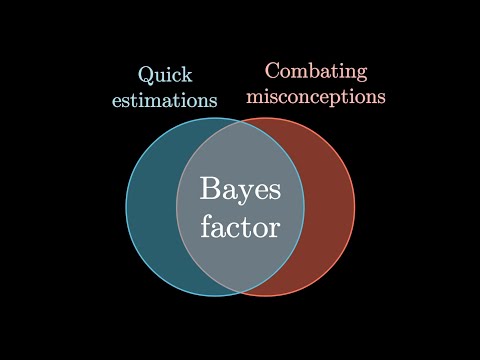
The medical test paradox, and redesigning Bayes' rule
3Blue1Brown
4 HN recommender · 2020–2025
 4 mo on HN
Is AI Safety a Pascal's Mugging?
Robert Miles AI Safety
3 HN recommender · 2019–2026
 4 mo on HN
How our voting system (and IRV) betrays your favourite candidate
The Center for Election Science
5 HN recommender · 2014–2023
4 comments from Hacker News
This may indirectly answer your question: ▶ this video TLDW: We don't pick numbers at random. At all. We're so bad at it that you can make money off this fact.
Oh, I remember good old fallout 1-2 when you have 42% hit chance but still miss 7 times in a row. There is also a good Numberphile video on what we think random really is (it is not) ▶ this video
I would argue that the problem with frequentist statistics is that it aligns with humans' flawed intuition of how randomness works. People are inherently obsessed with finding patterns to support their hypotheses. The problem is that what we perceive as random and extremely unlikely events are in fact much more probable than what we estimate from using Gaussian methods. And the frequentist approach helps to create this distortion by ignoring black swans. Here's a great video demonstrating how people tend to misunderstand randomness: ▶ this video
There is a very accessible "numberphile" video which I think is closely related to this, about playing the odds on predicting elements of a nominally-random coin-flip sequence using the expected run length. ▶ this video