Peter Norvig - The Unreasonable Effectiveness of Data
UBC Computer Science3 HN recommenders · recommended in 3 months, 2012–2026
lecture · intermediate · evergreen · 2012–2026 on HN
Peter Norvig's UBC distinguished lecture on how massive amounts of simple data, such as for language modeling, can yield understanding that hand-built models could not.
Recommended as a favorite tech talk showing how huge data availability changes how problems are approached.
Up next
 10 mo on HN
Hamming, "You and Your Research" (June 6, 1995)
securitylectures
11 HN recommender · 2012–2023
 8 mo on HN
Steve Jobs' 2005 Stanford Commencement Address
Stanford
9 HN recommender · 2009–2023
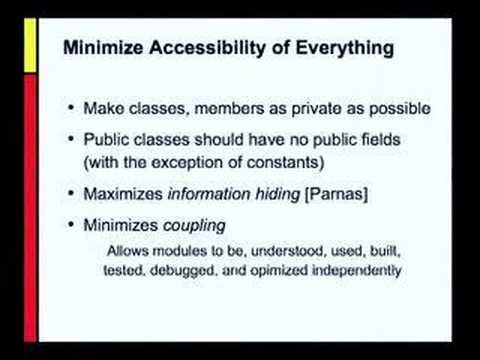 12 mo on HN
How To Design A Good API and Why it Matters
Google TechTalks
12 HN recommender · 2011–2025
 7 mo on HN
Bay Area Vision Meeting: Unsupervised Feature Learning and Deep Learning
Google TechTalks
9 HN recommender · 2011–2013
 6 mo on HN
"Voice Driven Development: Who needs a keyboard anyway?" by Emily Shea
Strange Loop Conference
5 HN recommender · 2020–2023
 6 mo on HN
Andrej Karpathy - AI for Full-Self Driving at Tesla
Matroid
4 HN recommender · 2020–2022
 5 mo on HN
Tensorflow and deep learning - without a PhD by Martin Görner
Devoxx
6 HN recommender · 2017–2020
 6 mo on HN
JPEG DCT, Discrete Cosine Transform (JPEG Pt2)- Computerphile
Computerphile
6 HN recommender · 2015–2026
 5 mo on HN
Fourier Optics used for Optical Pattern Recognition
Huygens Optics
5 HN recommender · 2021–2025
 5 mo on HN
Let's build the GPT Tokenizer
Andrej Karpathy
5 HN recommender · 2024–2025
 4 mo on HN
Massive-scale online collaboration | Luis von Ahn
TED
4 HN recommender · 2012–2022
 4 mo on HN
Breaking The Creepy AI in Police Cameras
Benn Jordan
6 HN recommender · 2025–2026
5 comments from Hacker News
Peter Norvig on the "Unreasonable Effectiveness of Data" ▶ this video I think it is so easy for us to discuss the impact of big data and quickly get into the weeds, but I think in this talk Norvig does an especially great job in making you truly appreciate the seismic impact that the availability of massive quantities of data can have on your way to think about problems. This is one of the first things I ever saw of him, and I've been in love ever since.
If you're looking for more examples and information about using simple algorithms with lots of data, I recommend Peter Norvig's "The Unreasonable Effectiveness of Data": ▶ this video
I am not sure if I disagree with the central thesis of the article, but the argumentation seems rather weak in many places, for example he says: Let's take the example of the number of people who walk into a store and buy a certain product. By studying 10 customers you can get an estimate of the probability of the purchase and predict sales; by studying 100 customers you get a better estimate. By analyzing 1000 customers you have a very good estimate. You could study a million customers, but the results are unlikely to be vastly different from the results of analyzing 1000 customers and probably not worth the expense. This makes sense only for very low-dimensional data sets, but most real-life problems are very high-dimensional and in high-dimensional spaces a million customers (or any other number of samples you might reasonably expect to gather) might still very well be only a small sample. So, there are situations where because of various constraints you will never be able to get to this level where more data stops yielding better results. You can watch a nice presentation from Peter Norvig about the unreasonable effectiveness of data: ▶ this video Or read about the well-known curse of dimensionality: link
That happens often with domain names, but then you get expertsexchange.com, penisland.net, whorepresents.com, therapistfinder.com, a Dutch pre-match analysis site voorspel.nl, or a site about the game overspel.nl. Peter Norvig - The Unreasonable Effectiveness of Data ▶ this video
This is old news: Peter Norvig, The Unreasonable Effectiveness of Data (2011): ▶ this video and a previous article from 2009: link