Money as Debt - Full Documentary
Free Your Mind2 HN recommenders · recommended in 3 months, 2017–2023
documentary · intro · evergreen · 2017–2023 on HN
Paul Grignon's animated documentary presenting his view of how banks create money as debt and why that system requires continuous growth. It outlines the historical background of modern banking.
Recommended as an approachable explanation of fractional reserve banking, with the caveat that it is biased.
Up next
 1 mo on HN
Student Debt: Last Week Tonight with John Oliver (HBO)
LastWeekTonight
1 HN recommend · 2015–2017
 17 mo on HN
How The Economic Machine Works by Ray Dalio
Principles by Ray Dalio
18 HN recommender · 2014–2026
 12 mo on HN
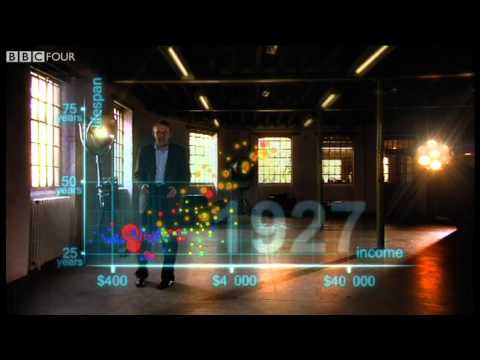
Hans Rosling's 200 Countries, 200 Years, 4 Minutes - The Joy of Stats - BBC
BBC
10 HN recommender · 2010–2023
 11 mo on HN
Principles for Dealing with the Changing World Order by Ray Dalio
Principles by Ray Dalio
10 HN recommender · 2022–2025
 10 mo on HN
Fear the Boom and Bust: Keynes vs. Hayek - The Original Economics Rap Battle!
Radical Discourse
10 HN recommender · 2010–2024
 10 mo on HN
Why American Cities Are Broke - The Growth Ponzi Scheme [ST03]
Not Just Bikes
14 HN recommender · 2021–2024
 8 mo on HN
The Spider's Web: Britain's Second Empire | The Secret World of Finance
Independent POV
6 HN recommender · 2019–2024
 7 mo on HN
The Truth about American Cities - Part 1 - Strong Towns [ST01]
Not Just Bikes
7 HN recommender · 2021–2026
 5 mo on HN
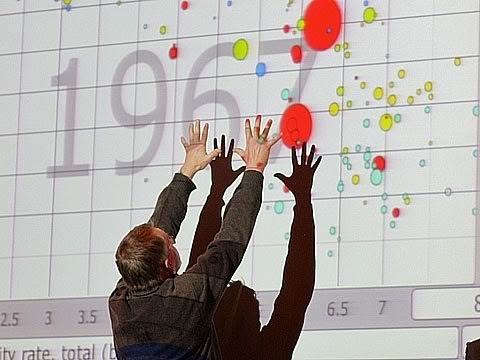
The best stats you've ever seen | Hans Rosling
TED
5 HN recommender · 2013–2026
 5 mo on HN
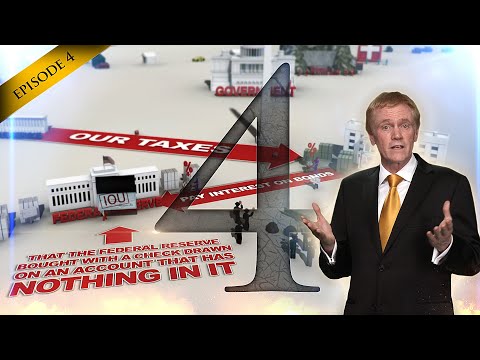
The IOU Machine: How Currency Is Created | Hidden Secrets of Money Ep. 4
GoldSilver
5 HN recommender · 2014–2023
 6 mo on HN
Jancovici : Can we save energy, jobs and growth at the same time ? 08/01/2018
Jean-Marc Jancovici
6 HN recommender · 2019–2023
 6 mo on HN
Where in the world is it easiest to get rich? | Harald Eia | TEDxOslo
TEDx Talks
5 HN recommender · 2016–2023
5 comments from Hacker News
>then didn't some subset of techies print a lot more money than there is? I think it's quite important that you watch this: ▶ this video If you feel extremely angry afterwards, you're not alone.
>I think it's also similar, to a lesser degree, to modern card-based banking, in which all the money physically sits in a vault and only changes hands virtually. That is in no way how modern banking works. Only about 1/7th of the money in peoples bank accounts in the US has a physical counterpart in any bank vault, almost all of the "money" in bank accounts is purely virtual. Most money today is not printed by the mint but instead wizarded into existence in a fashion pretty much the same as how world of warcraft gold is created, but with regulatory restrictions in place around the wizardry to create desired economic outcomes. When a crisis prompts the population to collectively attempt to withdraw more than this reserve 1/7th, it's called a "run on the bank". The bank is unable to fulfill it's obligations[1], and economies break down as faith in the currency collapses. This is exactly what happened to Cypris in 2012. The whole system basically hinges on a significant majority of the population not scrutinizing the banking sector too closely. If you'd like to know more, there are quite a few great youtube videos on fractional reserve banking, and it's absolutely worth investing an hour to watch one of the longer ones. This one is pretty good and approachable, although it's certainly biased: ▶ this video [1] It's actually more complex than this. Central banks can help prop up other banks in this case, but central banks also have their limits in the case of a nation-wide run on multi
Money has a very long history and discussions about money are deeply entangled in bitter and fanatical battles between political/ religious/ philosophical viewpoints. Many of those viewpoints ignore the counterintuitive ways that money and banking actually work. For the most part, bankers and economists have a vested interest in keeping as many outsiders as possible from understanding how it really works. For all its flaws and strange history, the first Money as Debt video [1] still makes the most sense to me and I have yet to find an economist at a dinner party who refutes the disturbing conclusion that modern monetary policy is inherently unstable and depends on continuous economic growth. I welcome any links to any counterarguments that are not a confusing morass of obfuscating terminology. Show me a crystal clear model, or a common sense presentation like this video, that argues that the current monetary system is not a Ponzi scheme. 1 ▶ this video
▶ this video More or less. Long story short, when money is lent in a bank, it’s then deposited elsewhere, and then it can be lent again , such that with a fractional reserve of 10% you can ultimately multiply the amount of money in all deposited accounts by 10. In other words, a whole bunch of money just got created. It’s not central money, but it’s still money. You could maybe try to counter with "but but but bank runs", but if this happens the state tend to print central money to compensate, thus actualising the money creation that happened with fractional reserve banking alone. > If we didn't have fractional reserve banking, it feels banks could not lend AT ALL. They could lend their own money. > Also, what does "more democracy" concretely mean here, as nice as the phrase is? In this particular instance I’m thinking of full reserve banking (deposit banks turn back into glorified vaults), print central money for mortgages (and burn that money when it’s paid back), and democratically (with congress, referendum, whatever) define clear criteria about who can contract mortgages, and what for. Criteria which would then be enforced by mortgage clerk, on behalf of the state. The point here is that instead of letting private interests that want to make money decide, the people decide (possibly through elected officials) of the applicable criteria.
Yeah, that narrative isn't new; its being covered in various documentaries and books, including this cartoon [1] Harari gives very good examples of how money is useful for trade in his book. These examples underline how money is useful for trade. Its downright impractical to trade goods for goods because of multiple factors: fluctuation of value, different values for different people, lack of preference of the item from one of the parties. Perhaps there was not one reason why money is useful. There surely isn't one now. [1] ▶ this video